Learning the essential principles of Smallcase vs Mutual Fund is critical for anyone looking to build healthy money habits, avoid debt traps, and make smart financial decisions in India.
Learning the essential principles of Smallcase vs Mutual Fund is critical for anyone looking to build healthy money habits, avoid debt traps, and make smart financial decisions in India.
Learning the essential principles of Smallcase vs Mutual Fund is critical for anyone looking to build healthy money habits, avoid debt traps, and make smart financial decisions in India.
Learning the essential principles of Smallcase vs Mutual Fund is critical for anyone looking to build healthy money habits, avoid debt traps, and make smart financial decisions in India.
Essential Overview: Guide to Smallcase vs Mutual Fund
Learning about Smallcase vs Mutual Fund is essential for anyone looking to build healthy money habits. If you are stepping into the Indian stock market in 2026 with your first savings or stipend, you have almost certainly encountered the ongoing debate: Should you start with Direct Mutual Funds, or build curated stock baskets via Smallcase?
On one side, traditional mutual fund campaigns urge that “Mutual Funds Sahi Hai”. On the other, modern fintech influencers argue that “Smallcase is the 2.0 version of mutual funds because you own real shares in your Demat account without paying ongoing fund management cuts.”
Additionally, for verified statutory guidelines and official regulatory protections, refer directly to the Securities and Exchange Board of India (SEBI).
Essential Overview: Guide to Smallcase vs Mutual Fund
Essential Overview: Guide to Smallcase vs Mutual Fund
Additionally, having actively invested in both instruments across bull and bear cycles over the past few years, I can tell you that the truth is far more nuanced than 30-second reels suggest. Furthermore, smallcase is an incredible product for certain investors, but for complete beginners with small starting capital, it introduces operational and tax frictions that very few creators talk about.
⚡ Quick Verdict for 2026 (TL;DR):
For Beginners with Capital < ₹50,000: Direct Mutual Funds (especially a low-cost Nifty 50 Index Fund) are indisputably the better choice. You get ₹100/month automated SIPs, zero manual rebalancing hassle, and zero capital gains taxes when fund managers churn internal stocks.
For Intermediate Investors with Capital > ₹1,00,000: Smallcase is a great tool for direct shareholder rights, transparency, and concentrated thematic bets (like EV, Defense, or Renewable Energy), provided you are willing to manage manual quarterly rebalance orders, DP charges, and short-term capital gains tax.Actionable Advice and Practical Tips for Smallcase vs Mutual Fund

⚡ Smallcase vs MF: Quick 30-Second Summary for Beginners
: Complete Guide to Smallcase vs Mutual Fund
If you are deciding between Smallcase vs MF (Mutual Funds) for your monthly savings or stipend in 2026, here is the direct, unfiltered verdict:
🟢 Mutual Funds (MF)
Best For: 90% of beginners, college students, and salaried professionals starting with ₹500 to ₹5,000 monthly SIP.
- Automated Compounding: Rebalancing is handled automatically by SEBI-registered fund managers with zero effort.
- Zero Tax Friction: No capital gains tax triggers when the fund manager buys or sells stocks internally.
- Zero Hidden Fees: No DP charges, no per-trade brokerage on monthly SIP installments.
🔵 Smallcase (Direct Equities)
Best For: Active investors with ₹20,000+ capital who want direct Demat ownership and thematic exposure (e.g., Defence, EV, Green Energy).
- Direct Demat Ownership: You own the actual shares in your Zerodha or Groww account.
- Direct Dividends: Company dividends are credited directly into your linked bank account.
- Friction Points: Every rebalance requires manual confirmation, triggers ₹15.93 DP charge per stock sold, and incurs short-term capital gains tax.
💡 Final Bottom Line: For pure wealth building with minimal hassle, choose Mutual Fund (MF) Direct-Growth. If you are passionate about direct stock ownership and have higher capital, explore Smallcase.
My Real Portfolio Experiment: What Actually Happened to ₹30,000: Complete Guide to Smallcase vs Mutual Fund
Furthermore, for example, back in late 2023, I decided to test both platforms with identical real capital rather than relying on backtested models. I put ₹30,000 into a widely recommended Smallcase (All Weather Investing) and ₹30,000 into a Direct Nifty 50 Index Mutual Fund.
Specifically, twelve months later, both portfolios showed roughly 14% to 15% pre-tax paper gains. But when I audited my actual bank deposits and tax console on Zerodha Kite, the net returns told a completely different story:
- The Smallcase Friction: Over the year, the Smallcase manager issued 4 quarterly rebalancing updates. Consequently, across those rebalances, 7 stocks were sold and replaced. In addition, every single stock exit triggered a ₹15.93 CDSL DP charge, plus exchange turnover fees and STT. Specifically, even worse, selling profitable stocks within 12 months triggered a 20% Short-Term Capital Gains (STCG) tax under India’s updated tax regime. Therefore, across ₹30,000, those micro-deductions dragged down my net return by nearly 1.8%.
- The Mutual Fund Compounding Advantage: The index fund manager rebalanced the underlying Nifty 50 basket internally as company weightings shifted. Yet, not a single rupee of brokerage, DP charge, or capital gains tax was deducted from my account. In fact, under Section 10(23D) of the Income Tax Act, mutual fund internal portfolio turnover is 100% tax-exempt.
The Takeaway: On smaller portfolios, transaction friction and quarterly taxes quietly devour compounding benefits before your money has time to snowball.
The Structural Architecture: How Each Model Works: Complete Guide to Smallcase vs Mutual Fund
Before comparing returns, it is essential to understand the legal and operational plumbing of both instruments.
Compare Platform Charges & Demat DP Fees
Consequently, calculate your net trading fees, brokerage, STT, and depository participant charges before executing stock baskets.
1. Furthermore, mutual Funds: The Pooled Trust Architecture: Complete Guide to Smallcase vs Mutual Fund
A mutual fund is a SEBI-regulated Trust. Moreover, millions of investors pool their capital together into a common pot managed by an Asset Management Company (AMC) like SBI, HDFC, or Nippon. A professional fund management team deploys that money across 40 to 80 individual stocks or bonds according to a defined investment mandate.
- However, you do not own individual stock certificates; you receive Units (Net Asset Value – NAV) representing your proportional stake in the entire pool.
- Because the pool is fractional, you can invest as little as ₹100 or ₹500 per month.
- First, first, first, first, you do not even need a Demat account. You can hold mutual funds in traditional Statement of Account (SoA) format directly through AMC websites, MFCentral, or CAMS.
2. Overall, smallcase: The Demat Stock Basket Architecture: Complete Guide to Smallcase vs Mutual Fund
Furthermore, for example, smallcase is not an asset management company or a mutual fund. It is a fintech aggregation platform that connects retail investors to SEBI-registered Research Analysts (RAs) and Registered Investment Advisors (RIAs).
- When you purchase a Smallcase, the platform executes a batch of market orders directly through your linked broker (such as Zerodha, Groww, Angel One, or Upstox).
- You own individual shares directly in your Demat account. If the basket includes Tata Motors, Infosys, and HDFC Bank, those exact shares sit in your CDSL/NSDL holding statement.
- Next, next, next, next, in fact, dividends bypass any fund manager and are credited directly to your bank account.
- Because Indian law does not permit fractional equity shares, you must purchase at least 1 whole share of every company in the basket. This pushes the minimum entry ticket for most Smallcases to ₹2,500 – ₹10,000+.
Smallcase vs Mutual Fund: Head-to-Head Comparison Matrix
However, here is an objective comparison of the key parameters that directly impact your wallet:
| Key Parameter | Direct Mutual Funds | Smallcase Baskets | Senior Blogger Verdict |
|---|---|---|---|
| Minimum Ticket Size | ₹100 to ₹500 monthly | ₹2,500 to ₹15,000+ per basket | Mutual Funds Win for pocket money budgets. |
| Asset Ownership | Units of the Fund (NAV) | Direct shares in your Demat account | Smallcase Wins for transparency & voting rights. |
| SIP Automation | 100% automated via Bank e-Mandate/UPI | Requires manual login & order execution each month | Mutual Funds Win for psychological discipline. |
| Internal Rebalancing Tax | 0% Tax (Section 10(23D) tax exemption) | 20% STCG Tax on all profitable stock exits | Mutual Funds Win by a wide margin. |
| Fee Structure | Expense Ratio (0.1% to 0.7% in Direct plans) | Brokerage + DP charges (₹15.93/stock) + Manager Fees | Mutual Funds Win on smaller capital portfolios. |
| Demat Account Mandatory? | No (SoA or Demat both supported) | Yes (Mandatory Demat with supported broker) | Mutual Funds Win for ease of onboarding. |
| Thematic & Sector Flexibility | Rigid SEBI category mandates | Highly tailored themes (Defense, EV, Green Energy) | Smallcase Wins for focused trend investing. |
| Beginner Suitability | ⭐ 10/10 (Passive, stress-free compounding) | ⭐ 6/10 (Requires portfolio management & capital) | Mutual Funds Win for first-time investors. |
The Hidden Cost Reality: Rebalancing, DP Charges, and Taxes: Complete Guide to Smallcase vs Mutual Fund
Consequently, many first-time investors see a Smallcase with a “Free to Invest” badge and assume it costs nothing. This is where real-world operational friction catches beginners off guard.
In fact, consider what happens during a standard quarterly rebalance:
Actionable Advice and Practical Tips for Smallcase vs Mutual Fund
- Manual Execution Hassle: Under SEBI safety rules, no third-party app can buy or sell shares from your Demat account automatically. When a research analyst adjusts the basket, you receive an alert. You must log in during active market hours (9:15 AM to 3:30 PM), review the order, and authorize it. If you are in a college lecture or busy at work and miss the notification, your portfolio drifts off-target.
- DP Charges on Every Exit: Every time a stock is sold from your Demat account, your depository (CDSL/NSDL) charges a flat fee (typically ₹15.93 + GST on discount brokers like Zerodha). If a rebalance replaces 5 stocks, you immediately pay ~₹80–₹95 in DP fees, regardless of whether your position in that stock was ₹500 or ₹50,000. On a ₹15,000 portfolio, losing ₹95 per quarter equals a 2.5% annualized fee drag!
- The Short-Term Capital Gains (STCG) Drag: In Budget 2024, equity STCG tax was increased to 20%. When your Smallcase manager trims winning stocks within 12 months of purchase, that gain is immediately subject to STCG tax. In contrast, when an index mutual fund manager rebalances holdings, the compounding continues uninterrupted without triggering an immediate tax event.
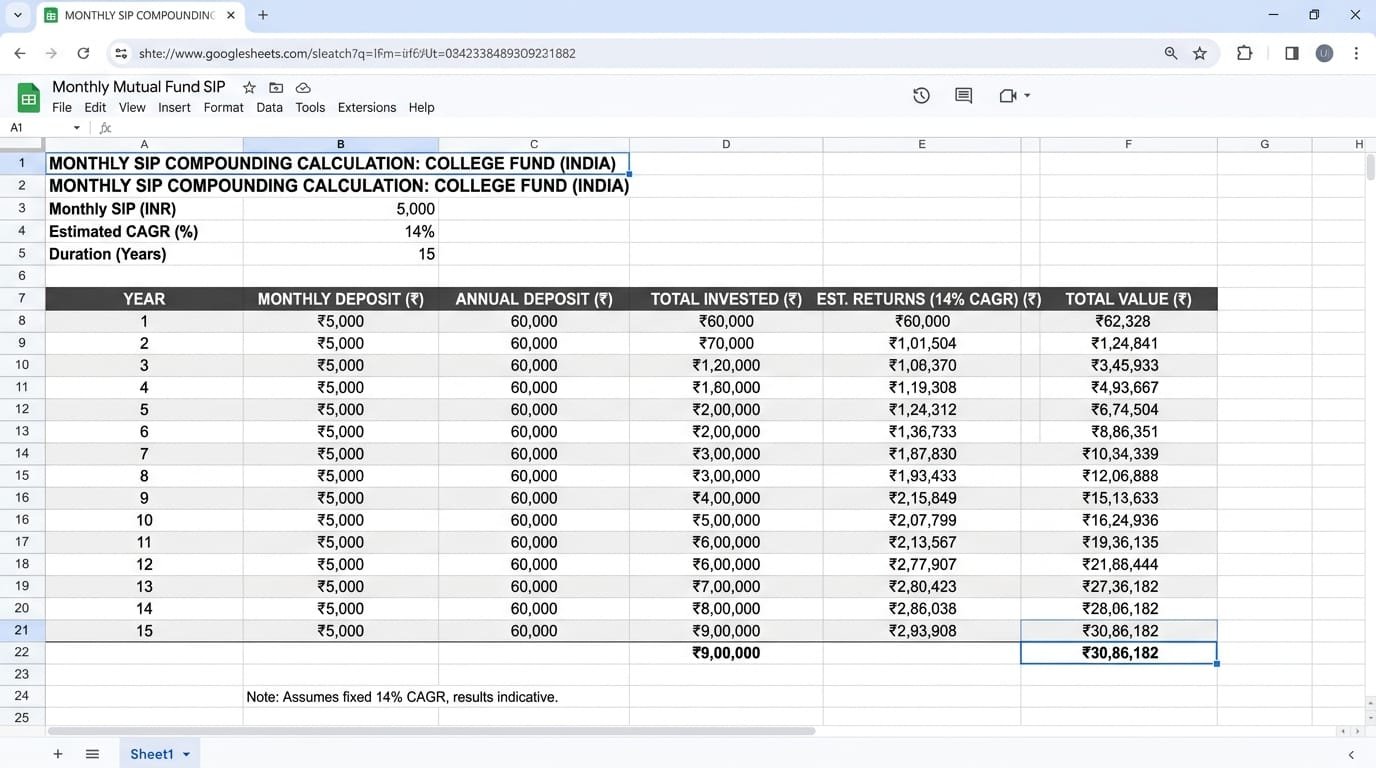
In addition, want to see the compounding difference when fee friction is kept near zero? Consequently, check out our interactive calculator:
Real-World Math: ₹5,000 Monthly SIP Over 3 Years (The Hard Numbers): Complete Guide to Smallcase vs Mutual Fund
To see how these micro-charges accumulate over time, let us compare an investor putting ₹5,000 every month for 3 years (Total Capital Invested: ₹1,80,000) at an assumed 14% gross market return in both options:
| Cost & Return Factor | Direct Index Mutual Fund | Smallcase Basket (4 Rebalances/Yr) | Net Investor Advantage |
|---|---|---|---|
| Total Capital Invested | ₹1,80,000 (36 months × ₹5,000) | ₹1,80,000 (36 months × ₹5,000) | Equal capital baseline |
| Brokerage & Turnover Fees | ₹0 (Direct AMC / Free platform) | ~₹2,160 (Buy/Sell order fees) | Mutual Fund saves ₹2,160 |
| Depository (DP) Charges | ₹0 (No Demat exit fees) | ~₹1,530 (12 rebalances × 8 stock exits) | Mutual Fund saves ₹1,530 |
| Quarterly STCG Tax Drag (20%) | ₹0 (Exempt under Sec 10(23D)) | ~₹6,850 (Tax paid on rebalance gains) | Mutual Fund saves ₹6,850 |
| Ongoing Platform / Advisory Fees | Expense ratio deducted in NAV (~₹900) | Free basket (₹0) to Paid (~₹6,000+) | Mutual Fund simpler deduction |
| Estimated In-Hand Final Corpus | ~₹2,24,600 | ~₹2,13,800 | Mutual Fund delivers ₹10,800+ extra cash! |
On a modest ₹5,000 monthly SIP, the Smallcase investor loses over ₹10,800 purely to friction and quarterly tax leakage. This is why for small monthly budgets, low-cost Direct Mutual Funds consistently produce superior net in-hand wealth.
Dividend Taxation: The Silent Compounding Leak
Another major difference that most beginners overlook is how company dividend payouts are treated by the Income Tax Department:
- In a Smallcase: Every dividend paid by companies in your basket is credited directly to your bank account. As a result, under Section 56(2)(i) of the Income Tax Act, dividends are added to your total income and taxed at your personal slab rate (with 10% TDS deducted if payouts exceed ₹5,000). Because that cash lands in your savings account, it is often spent on everyday expenses rather than reinvested.
- In a Direct Mutual Fund (Growth Option): When underlying companies declare dividends, the fund manager instantly reinvests 100% of that capital back into more shares within the fund pool. Zero tax is deducted annually, and your compounding snowball remains entirely uninterrupted.
The 2026 Decision Framework: Which Should You Choose?
To make your decision straightforward, use this simple checklist:
Choose Direct Mutual Funds If:
- Then, your monthly investable surplus is between ₹500 and ₹5,000.
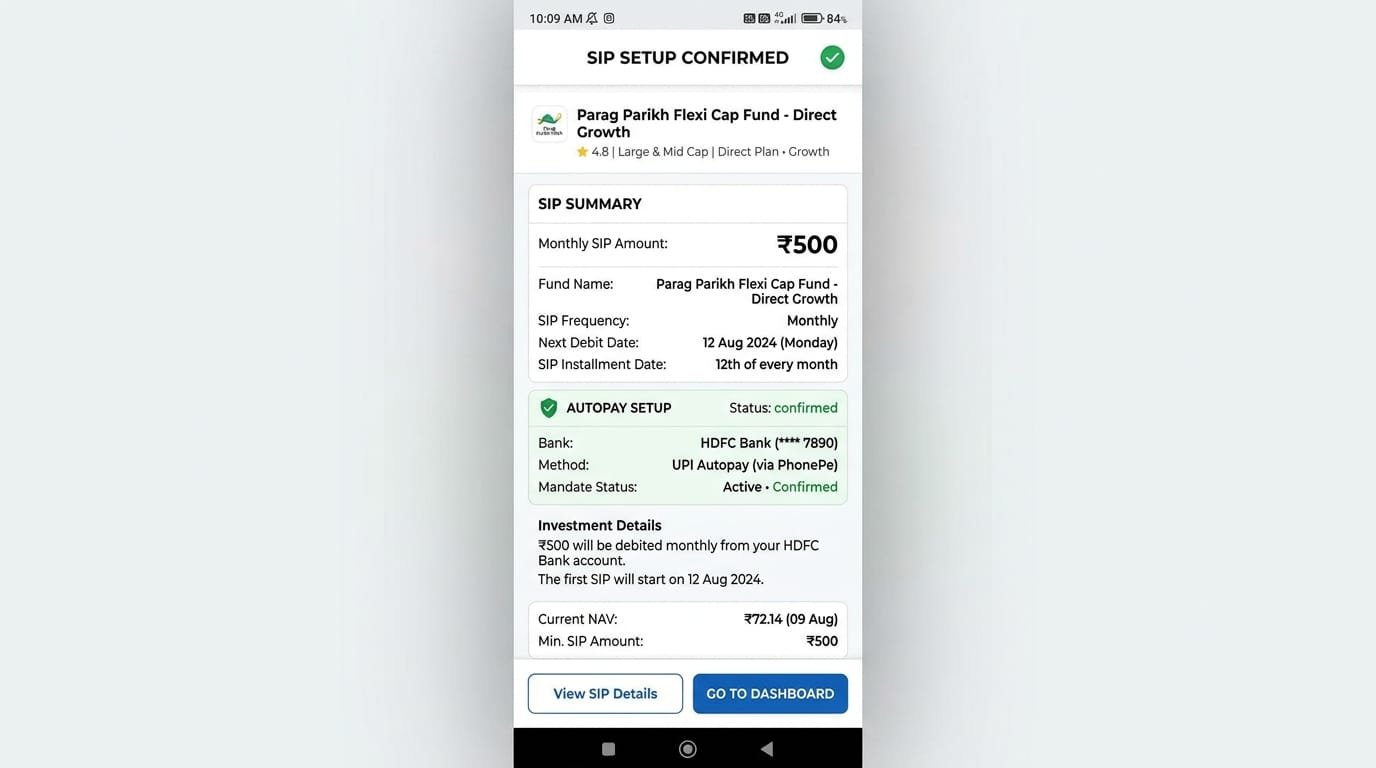
- Moreover, you want a strictly automated, “hands-off” process that runs on auto-pilot via UPI AutoPay or bank mandate.
- Additionally, you do not want to spend hours tracking quarterly rebalance emails or calculating STCG taxes during income tax filing.
- Furthermore, notably, your primary financial goal is building long-term wealth over 5, 10, or 20 years through the broad growth of the Indian economy.
Choose Smallcase If:
- Finally, you have an existing investable capital of at least ₹75,000 to ₹1,00,000.
- Additionally, you already understand basic equity market concepts (price-to-earnings ratios, dividend yields, market caps).
- Specifically, you want direct shareholder voting rights, shareholder perks, and direct dividend deposits.
- Then, first, for example, you want targeted exposure to high-conviction emerging themes (such as green hydrogen, infrastructure, or defense manufacturing) that traditional mutual funds cannot hold in concentrated proportions.
The Ideal Roadmap for Indian Beginners in 2026
Moreover, you do not have to pick one instrument and stick with it forever. The smartest strategy used by seasoned retail investors is a phased progression:
- Phase 1 (The Core Foundation): Start by putting 100% of your investment capital into a low-cost Nifty 50 Index Fund (Direct Plan) with an expense ratio below 0.20%. This builds investment discipline and gets you accustomed to natural market volatility without worrying about stock selection.
- Build a 3–6 Month Cash Buffer: Before taking higher equity risks, ensure you have an emergency fund parked in a high-interest savings account or liquid fund. You can calculate your exact buffer using our Emergency Fund Calculator.
- Year 3 Onwards (Add Satellite Smallcases): Once your core mutual fund portfolio crosses ₹1 Lakh and you develop an understanding of market sectors, begin allocating 15% to 20% of your fresh monthly savings into a high-quality, low-churn Smallcase.
The 2-Minute Pre-Investment Checklist (Before You Hit Buy)
Before launching an investment on Zerodha Kite, Groww, or Angel One, run through this quick editorial checklist:
Beginner Preparedness Checklist:
Liquidity First: Do you have at least 3 months of basic living expenses safe in a savings account or liquid fund? (Use our Emergency Fund Calculator).
Time Horizon Check: Is your money committed for at least 3 to 5 years? (Equity volatility hurts short-term withdrawals).
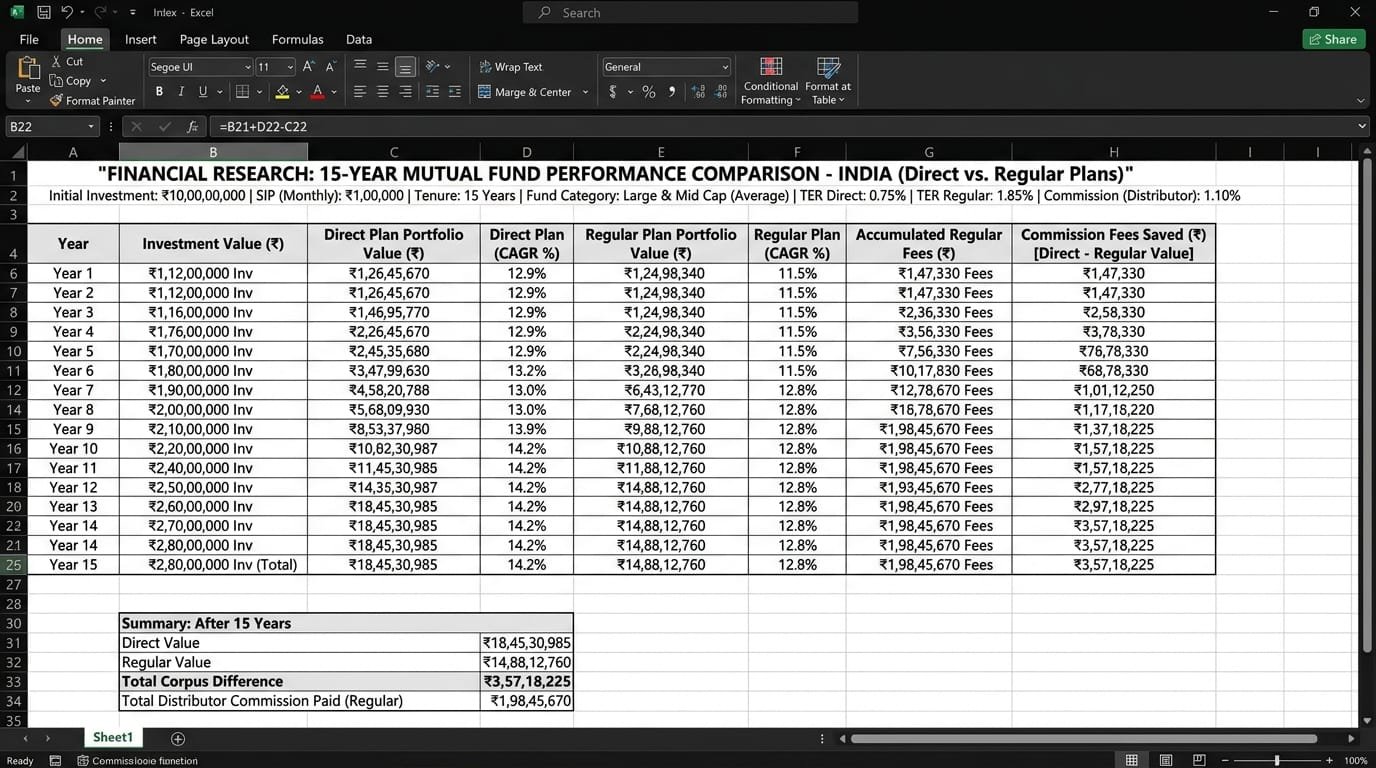
Direct Plan Verification: If picking mutual funds, ensure the fund name specifically includes “Direct – Growth” (not Regular) to avoid distributor commission cuts.
Capital Suitability: If starting Smallcase, is your starting balance above ₹50,000 to absorb DP charges and rebalancing taxes comfortably?
Top Mutual Funds Shortlist: If starting mutual funds, check out our curated guide on the Best 5 Mutual Funds for College Students in India (2026) for zero-commission picks.
Frequently Asked Questions (FAQ)
What is the main difference between Smallcase vs MF?
However, the fundamental difference between Smallcase vs MF lies in legal ownership, taxation, and convenience. In a Mutual Fund (MF), you own pooled units managed by a SEBI-registered AMC; internal rebalancing incurs zero capital gains tax or DP charges. In a Smallcase, you own the individual company shares in your Zerodha or Groww Demat; you receive direct corporate dividends, but each portfolio rebalancing incurs depository (DP) charges and taxable capital gains.
Mutual Fund vs Smallcase: Which gives higher returns?
Therefore, notably, neither product inherently gives higher returns since both invest in the same underlying Indian equities. However, over a 5 to 10 year horizon, low-cost Direct Mutual Funds often deliver higher net returns for retail investors because they avoid manager subscription fees (often ₹2,000–₹10,000/yr), eliminate DP charges on every rebalance, and allow uninterrupted compounding without premature tax deductions.
In fact, for most baskets, no. Because Smallcase buys whole equity shares on the NSE/BSE, your minimum investment must cover at least one share of every stock in the basket. For example, if a 10-stock basket requires at least one share of each company, the minimum entry ticket often ranges from ₹2,500 to ₹8,000+. Additionally, mutual funds allow true fractional unit accumulation starting at ₹100.
Additionally, not necessarily. During aggressive bull markets, focused thematic Smallcases (such as defense or capital goods) may surge. However, they also experience steeper drawdowns during corrections. In addition, once rebalancing taxes (20% STCG), DP charges (₹15.93 per stock exit), and management fees are deducted, net returns often closely match a diversified equity index or flexi-cap mutual fund.
Actionable Insights and Smart Advice for Smallcase vs Mutual Fund
Particularly, no. You can invest in Direct Mutual Funds through AMC portals, MFCentral, CAMS, or apps using just your PAN and bank account (Statement of Account format). A Demat account is mandatory for Smallcase because you buy individual listed stocks on the NSE/BSE.
Practical Steps & Actionable Tips for Smallcase vs Mutual Fund
Moreover, for example, no. Specifically, under SEBI regulations, automated third-party trading on personal retail Demat accounts is strictly prohibited. When a manager publishes a portfolio update, you must manually log in and click Apply Changes to execute the buy and sell orders.
Overall, direct Mutual Funds, specifically a low-cost Nifty 50 Index Fund. It eliminates all manual rebalancing friction, prevents quarterly capital gains tax drag under Section 10(23D), and enables automated monthly compounding starting from just ₹100 or ₹500.
Consequently, no. You cannot directly transfer or convert Smallcase equities into mutual fund units. To switch, you must sell your Smallcase shares in your Demat account, pay applicable DP fees and Short-Term/Long-Term Capital Gains taxes on profitable exits, transfer the proceeds to your bank account, and then start fresh mutual fund investments.
While an entire diversified basket going to zero is rare, a Smallcase holding 10 to 12 stocks carries substantial single-stock bankruptcy and downside risk if a constituent company crashes or faces fraud. In contrast, mutual funds hold 40 to 80 stocks with SEBI regulatory limits capping any single stock to a maximum of 10% of total assets, making total capital loss virtually impossible.
Editorial Standards & Author Profile

Asif Khan
Specifically, notably, asif has over 3–4 years of hands-on experience in personal finance, mutual funds, and retail stock investments in Indian markets. For example, starting as a student navigating pocket money budgeting, penny stock mistakes, and DP charges, he built a disciplined portfolio and founded PaisaKmao to provide transparent, math-backed guidance.
Written & Researched by Asif Khan
Written & Researched by Asif KhanFounder & Lead Financial Editor PaisaKmao.deAdditionally, over 4 years of active personal finance research in Indian markets. Specifically, focused on transparent, math-backed guides to help students and young professionals build wealth and manage money smartly.
⚖️ Regulatory & Compliance Disclaimer: In accordance with statutory guidelines from regulatory authorities like the Reserve Bank of India (RBI),
The financial analysis published on PaisaKmao.de is strictly for financial literacy and educational purposes. Neither the author nor PaisaKmao.de is a SEBI-registered Research Analyst (RA) or Registered Investment Advisor (RIA). In addition, equity investments, mutual funds, and thematic baskets are subject to market risks. However, read all scheme and offer documents carefully and consult an independent SEBI-registered financial planner before committing capital.