
introduction
Best Investments for College Students with $100 might sound impossible if you’re living on a tight student budget—but what if your first $100 could become the beginning of long-term wealth?
The truth is, you don’t need thousands of dollars to start investing. Thanks to modern investment platforms, college students can begin investing with as little as $100 while learning valuable financial skills for the future.
In this complete beginner’s guide, you’ll discover the Best Investments for College Students with $100, learn how to choose the right investment, avoid costly beginner mistakes, and build a smart investing strategy that can grow with you for years to come.
Why Should College Students Start Investing with $100?

Many people think Best Investments for College Students with $100 is just another finance topic, but it’s actually about building a strong financial future with a small amount of money. You don’t need thousands of dollars to start investing. What matters most is starting early, learning consistently, and allowing time to work in your favor.
Why $100 Is More Than Enough to Start
Starting with $100 helps you build confidence and practical investing experience without taking unnecessary financial risks. Many modern brokerage platforms allow beginners to invest in ETFs, index funds, mutual funds, and fractional shares with a small investment.
What Can You Invest In?
- Index Funds
- ETFs (Exchange-Traded Funds)
- Mutual Funds
- Fractional Shares
- High-Yield Savings Accounts
Before making your first investment, spending time with Investment Basics for Beginners can help you understand how markets work and make smarter decisions.
The Biggest Advantage College Students Have
Most people believe money is the biggest advantage in investing. In reality, time is your greatest asset. The earlier you begin, the more opportunity your investments have to grow through compounding.
Why Starting Early Matters
- More years for your investments to grow.
- Small investments can become significant over time.
- Less pressure to invest large amounts later in life.
- Better opportunity to recover from market downturns.
Learning about Compound Interest is one of the best ways to understand why starting with $100 today can be more valuable than waiting until you have thousands of dollars.
Build Financial Habits That Last a Lifetime
Finding the Best Investments for College Students with $100 is only the first step. Long-term success depends on developing smart financial habits that you continue after graduation.
Essential Habits Every Student Investor Should Build
- Invest consistently.
- Create a monthly budget.
- Reinvest your returns whenever possible.
- Keep learning through trusted resources like Investopedia, Morningstar, and the Vanguard Learning Center.
- Understand Investment Diversification before building your portfolio.
Focus on Learning Before Chasing Profits
Many beginners expect quick profits and become disappointed when markets fluctuate. Successful investors focus on gaining knowledge first and returns second. The more you learn today, the better your investment decisions will be in the future.Global Index Funds vs S&P 500: The Smarter Choice for Beginner Investors in 2026
Things to Do Before Investing Your First $100
Before choosing the Best Investments for College Students with $100, you should prepare yourself financially. Even the best investment can become a bad decision if you invest without a plan. These simple steps will help you protect your money and make smarter investment decisions from the beginning.
Set a Clear Financial Goal
Don’t invest just because everyone else is investing. Decide whether your goal is long-term wealth, saving for future education, buying a laptop, or achieving financial independence. A clear goal helps you choose the right investment strategy and stay focused.
Questions to Ask Yourself
- Why am I investing?
- When will I need this money?
- How much risk can I take?
Create a Small Emergency Fund
Before investing your first $100, keep some cash aside for emergencies. This prevents you from selling your investments during unexpected situations like medical expenses or urgent travel.
A Good Starting Target
- Save at least $100–$300.
- Keep it in a safe savings account.
- Use it only for real emergencies.
Understand Your Risk Tolerance
Every investment carries some level of risk. Some investments offer higher growth but greater volatility, while others are more stable. Learning your Risk Tolerance helps you make better investment choices instead of following trends.
Simple Risk Check
- Can you leave your money invested for 5 years?
- Will you stay calm if the market falls?
- Are you investing for short-term or long-term goals?
Learn Before You Invest
Knowledge is one of the best investments you’ll ever make. Spend time learning from trusted resources like Investopedia, https://www.investor.gov/and before investing your money. The more you learn today, the fewer mistakes you’ll make tomorrow.Related Reading I Need to Make $100 as a Student 7 Easy Ways That Actually Work
Best Investment Options for College Students with $100
Choosing the Best Investments for College Students with $100 isn’t about chasing the highest returns—it’s about selecting investments that match your financial goals, risk tolerance, and time horizon. Even with just $100, you can build a diversified portfolio and start your wealth-building journey.
Index Funds – Best for Long-Term Growth
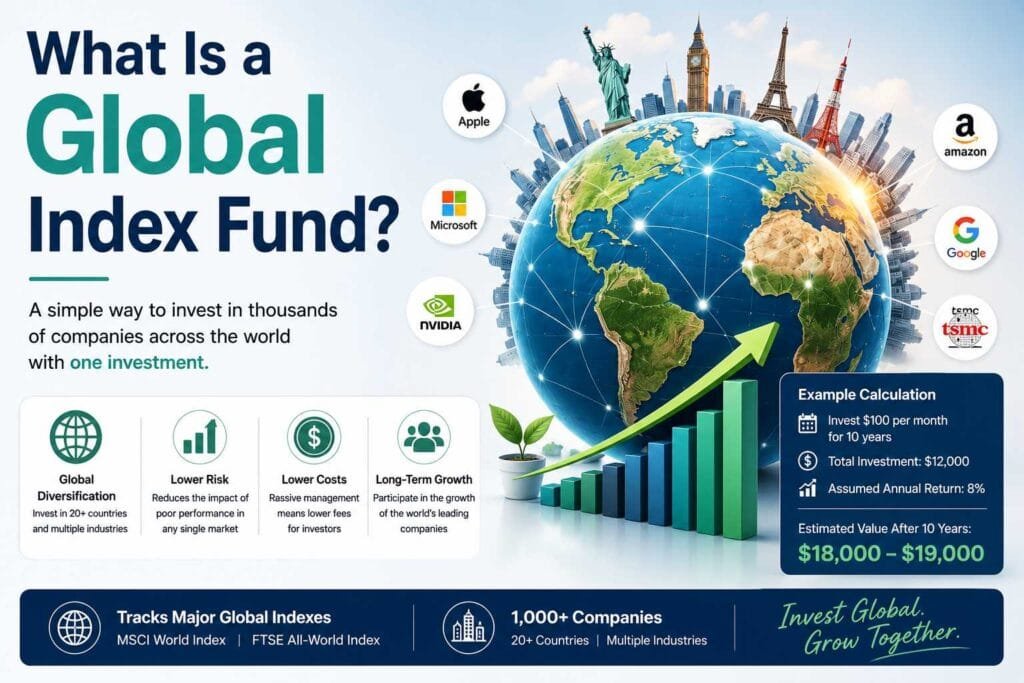
Index Funds are one of the smartest choices for beginners because they invest in hundreds of companies at once. They offer diversification, low fees, and strong long-term growth potential.
Why Choose Index Funds?
- Low investment risk
- Broad diversification
- Low expense ratio
- Beginner-friendly
Learn more from Investopedia and S&P 500.
ETFs – Flexible and Affordable Investing
ETFs work like stocks but provide the diversification of mutual funds. They’re easy to buy, low-cost, and perfect for students starting with $100.
Key Benefits
- Low fees
- Easy trading
- Diversified portfolio
- Long-term growth
Explore ETF Investing and Morningstar for deeper insights.
Fractional Shares – Invest in Top Companies
With Fractional Shares, you can own a small piece of companies like Apple or Microsoft without buying a full share.
Best For
- Small budgets
- First-time investors
- Long-term investing
Understand how Fractional Investing works before getting started.
High-Yield Savings Account – Safety First
If you may need your money soon, a High-Yield Savings Account offers a safer place to keep your savings while earning interest.
Best For
- Emergency funds
- Short-term goals
- Low-risk investors
Compare options using Bankrate.
Which Investment Is Right for You?
The Best Investments for College Students with $100 depend on your personal goals.
- Long-term growth → Index Funds
- Flexibility → ETFs
- Individual companies → Fractional Shares
- Maximum safety → High-Yield Savings Account
Before investing, continue learning through Investopedia, https://www.investor.gov/ and https://www.morningstar.com/the Vanguard Learning Center to make smarter financial decisions.Releted post Top 10 Finance Skills That Can Help Students Earn Money in Real Life
How to Build Your First $100 Investment Portfolio
After understanding the Best Investments for College Students with $100, the next step is creating a simple portfolio. A portfolio is a collection of investments that helps you reduce risk while giving your money the opportunity to grow over time. Instead of investing your entire $100 in one place, spreading it across different assets can be a smarter strategy.
A Simple $100 Portfolio Example
| Investment Option | Allocation | Amount |
|---|---|---|
| Index Fund | 50% | $50 |
| ETF | 30% | $30 |
| Fractional Shares | 20% | $20 |
Why This Portfolio Works
- Reduces investment risk through diversification.
- Gives exposure to both the overall market and individual companies.
- Beginner-friendly and easy to manage.
- Helps build long-term investing habits.
To understand portfolio building, learn about Asset Allocation and Diversification before making your first investment.
Invest Consistently Instead of Waiting
Your first $100 is only the beginning. If you continue investing even a small amount every month, your portfolio can grow significantly over time. This strategy is known as Dollar-Cost Averaging, where you invest regularly regardless of market conditions.
Monthly Investment Example
| Monthly Investment | 1 Year | 5 Years |
|---|---|---|
| $25 | $300 Invested | $1,500 Invested |
| $50 | $600 Invested | $3,000 Invested |
| $100 | $1,200 Invested | $6,000 Invested |
Continue improving your investing knowledge through https://www.morningstar.com/portfolios andhttps://www.schwab.com/learn Investor.gov, and the Vanguard Learning Center while reviewing your portfolio once or twice a year.
Common Mistakes College Students Should Avoid When Investing $100
Choosing the Best Investments for College Students with $100 is only the beginning. Many beginners lose money not because they choose the wrong investment, but because they make avoidable mistakes. Understanding these common mistakes can help you invest with more confidence and build long-term wealth.
Investing Without a Clear Goal
Many students start investing simply because everyone else is doing it. Before investing, decide whether your goal is long-term wealth, passive income, or gaining investing experience. A clear goal helps you make better financial decisions.
Ask Yourself Before Investing
- Why am I investing?
- How long can I keep this money invested?
- What is my financial goal?
Trying to Get Rich Quickly
One of the biggest mistakes beginners make is chasing quick profits. Successful investing is based on patience, consistency, and long-term thinking—not overnight success.
Focus on Long-Term Growth
- Invest regularly.
- Ignore short-term market noise.
- Stay invested during market ups and downs.
Learn more from Behavioral Finance.
Ignoring Diversification
Putting your entire $100 into a single stock increases risk. Diversifying your investments through index funds or ETFs can provide better stability and reduce the impact of market volatility.
A Smarter Strategy
- Diversify your investments.
- Review your portfolio yearly.
- Avoid emotional investing.
Explore Morningstar to compare funds and portfolios.
Final Takeaway
The Best Investments for College Students with $100 are the ones that match your goals, fit your risk tolerance, and help you stay invested consistently. Start small, keep learning, and remain patient. Over time, those small investments can become the foundation of lasting financial success.
Frequently Asked Questions (FAQs)
Yes. Many modern investment platforms allow college students to start investing with as little as $100. You can invest in Index Funds, ETFs, or Fractional Shares, making it easier to begin your investing journey without needing a large amount of money.
For most beginners, Index Funds are often considered one of the Best Investments for College Students with $100 because they offer diversification, lower risk, and long-term growth potential. However, the best choice depends on your financial goals and risk tolerance.
Yes. Every investment carries some level of risk, especially in the stock market. However, investing in diversified assets like Index Funds or ETFs and staying invested for the long term can help reduce risk over time.
Both are excellent options for beginners. Index Funds are ideal for long-term, hands-off investing, while ETFs offer more flexibility because they can be traded throughout the day. Your choice should depend on your investing style and financial goals.
Conclusion
Finding the Best Investments for College Students with $100 doesn’t require a large budget—it requires the right mindset and a smart strategy. By starting early, choosing beginner-friendly investments like Index Funds or ETFs, and investing consistently, you can build a strong financial foundation for the future.
Remember, successful investing isn’t about getting rich overnight. It’s about making informed decisions, staying patient, and allowing your investments to grow over time. Even your first $100 can be the beginning of a lifelong wealth-building journey.
Related Articles
How to Start Investing with Little Money
Best Budgeting Tips for College Students
Index Funds vs ETFs for Beginners
- Emergency Fund vs Savings Account: Where to Keep Your Backup Cash in 2026?
- How to Organize Multiple Savings Goals Before 2027: A Simple Money Plan
- Cash Stuffing Method for Beginners: A Simple Step-by-Step Guide
- How to Budget When Living Paycheck to Paycheck
- How to Divide Your Salary for Beginners: Complete Guide With Examples
- Emergency Fund vs Savings Account: Where to Keep Your Backup Cash in 2026?

- How to Organize Multiple Savings Goals Before 2027: A Simple Money Plan
- Cash Stuffing Method for Beginners: A Simple Step-by-Step Guide
- How to Budget When Living Paycheck to Paycheck
- How to Divide Your Salary for Beginners: Complete Guide With Examples
- What Are the 7 Rules of Personal Finance? Complete Beginner’s Guide (2026)
- Personal Finance for Beginners: 10 Steps to Manage Your Money (2026)
- Financial Planning for Beginners (2026): 10 Simple Steps
- How to Budget with an Irregular Income: Step-by-Step Guide (2026)
- How to Save Money Fast in 30 Days (2026): 15 Proven Strategies That Actually Work
- How to Manage Your Salary: A Complete Day 1 to Day 30 Money Plan (2026)
- Why Can’t I Save Money? 5 Hidden Reasons You’re Still Broke Even With a Good Salary
- 10 Best AI Tools to Manage Your Personal Finances in 2026: The Ultimate Guide
- 10 Best Financial Habits Every College Student Should Develop (2026)
- Best Investments for College Students with $100: A Complete Beginner’s Guide (2026)
- Global Index Funds vs S&P 500: The Smarter Choice for Beginner Investors in 2026