

Starting an investment journey during college can completely transform your long-term financial future. While most college students assume that investing in the stock market requires huge capital, financial degrees, or full-time corporate salaries, the Indian mutual fund ecosystem has evolved dramatically. Today, any student with an active smartphone and just ₹100 to ₹500 from their monthly pocket money can build a high-compounding investment portfolio.
In this comprehensive guide, we will break down the top five beginner-friendly mutual funds for Indian college students in 2026. You will learn the exact expense ratios, portfolio holdings, how to complete paperless KYC without income proof, and how to automate your monthly SIP on Zerodha Coin, Groww, or Angel One.
Disclaimer: The financial insights shared in this article are solely for educational, academic, and informational purposes. We are not SEBI-registered investment advisors. Mutual fund investments are subject to market risks; past performance does not guarantee future returns. Always review the Scheme Information Document (SID) on official AMC portals before investing.
Why College Students Should Start a Mutual Fund SIP Early
When you are 18 to 22 years old, your biggest financial superpower is not the amount of money in your wallet, but the time you have ahead of you. Compounding works like a rolling snowball: the longer your money stays invested in quality companies, the faster your returns begin to generate their own returns.
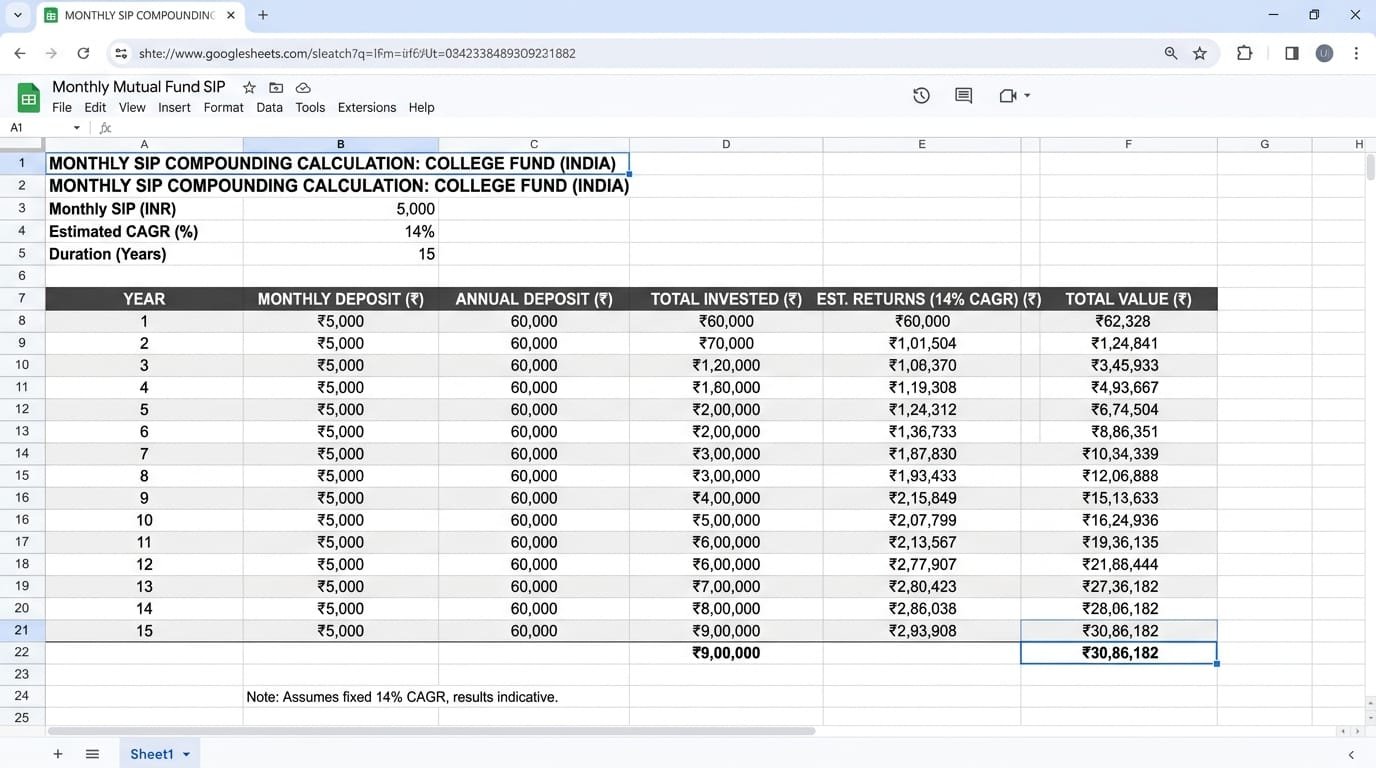
To see the real power of time, consider two college students investing ₹500 every month at an average historical return of 14% CAGR:
- Student A (Starts at Age 18): Invests ₹500 every month from pocket money or freelance stipends. Over 35 years until age 53, the total money deposited is just ₹2.10 Lakhs. At 14% CAGR, the final portfolio grows to over ₹35,40,000!
- Student B (Waits until Age 25): Decides to wait for a full-time corporate job. By delaying by just 7 years, their portfolio reaches only ₹13,80,000.
A short 7-year delay costs Student B over ₹21 Lakhs in compounding gains. That is why starting early with whatever small amount you can save from canteen expenses is the single smartest money decision you can make in college.
Quick Comparison: Top 5 Mutual Funds for Students at a Glance
The table below provides a quick side-by-side comparison of the five premier student-friendly equity schemes based on their category, entry requirements, ongoing costs, and long-term risk profiles:
| Fund Scheme | Category | Minimum SIP | Direct Expense Ratio | Risk Level | Ideal For |
|---|---|---|---|---|---|
| Parag Parikh Flexi Cap | Flexi Cap | ₹1,000 | ~0.65% | Moderate to High | All-round wealth (5+ yrs) |
| Nippon India Small Cap | Small Cap | ₹100 | ~0.70% | Very High | Aggressive growth (7+ yrs) |
| HDFC Index S&P BSE Sensex | Index (Passive) | ₹100 | ~0.20% | Moderate | Safe beginner entry (3+ yrs) |
| Quant Multi Asset | Multi Asset | ₹500 | ~0.75% | Moderate | Equity + Gold balance |
| ICICI Prudential Bluechip | Large Cap | ₹100 | ~0.85% | Low to Moderate | Capital stability & low swings |
Detailed Review of the 5 Best Mutual Funds for Students
1. Parag Parikh Flexi Cap Fund (Direct - Growth)
The Ultimate Foundation Fund: If you only want to invest in a single equity mutual fund throughout your entire college degree, Parag Parikh Flexi Cap is arguably the most disciplined option in India. Because it is a flexi-cap fund, the fund managers have complete freedom to invest across large-cap, mid-cap, and small-cap companies depending on where the best value lies.
- Assets Under Management (AUM): ₹75,000+ Crores
- Direct Expense Ratio: ~0.65% (Very competitive for an actively managed fund)
- Benchmark: NIFTY 500 TRI
- Top Indian Holdings: HDFC Bank, Bajaj Holdings, ITC, Power Grid, ICICI Bank
- International Advantage: The fund holds global tech giants like Alphabet (Google) and Microsoft. This gives students automatic foreign currency diversification, protecting your portfolio if the Indian rupee depreciates against the US dollar.
- Minimum SIP: ₹1,000 per month (Ideal if you earn stipends or receive consistent pocket money).
2. Nippon India Small Cap Fund (Direct - Growth)
Highest Growth Potential for Patient Students: Small-cap funds invest in emerging, fast-growing companies ranked 251st and below in Indian stock exchanges. Nippon India Small Cap is one of the largest and most consistently managed small-cap schemes in India.
- Assets Under Management (AUM): ₹55,000+ Crores
- Direct Expense Ratio: ~0.70%
- Benchmark: NIFTY Smallcap 250 TRI
- Top Holdings: Tube Investments of India, Apar Industries, HDFC Bank, Voltamp Transformers
- Why It Suits College Students: Because students have 10 to 15 years before retirement or major adult liabilities, you can easily ride out short-term market crashes. Historically, small caps offer the highest wealth multiplier over 7 to 10-year horizons.
- Minimum SIP: Just ₹100 per month, making it accessible to any student with basic pocket money.
3. HDFC Index S&P BSE Sensex Fund (Direct - Growth)
The Safest, Lowest-Cost Passive Entry: An index fund does not rely on a human fund manager picking individual stocks. Instead, it mechanically mirrors India's premier benchmark index—the S&P BSE Sensex—which tracks the country's top 30 corporate giants like Reliance Industries, TCS, Infosys, and Larsen & Toubro.
- Assets Under Management (AUM): ₹8,000+ Crores
- Direct Expense Ratio: ~0.20% (Ultra-low cost; almost zero fees deducted)
- Tracking Error: Less than 0.05% (Extremely accurate index replication)
- Zero Fund Manager Risk: You never have to worry about a manager making bad bets. As long as India's overall economy and top industries expand, your investment grows steadily with it.
- Minimum SIP: ₹100 per month.
4. Quant Multi Asset Fund (Direct - Growth)
All-Weather Protection During Market Dips: Most college beginners get panicked when the stock market drops 10% during exam season. A Multi Asset Allocation Fund solves this by automatically diversifying your money across three different asset classes: Equities (Stocks), Gold, and Debt (Bonds).
- Assets Under Management (AUM): ₹3,500+ Crores
- Direct Expense Ratio: ~0.75%
- Portfolio Asset Allocation: ~55% Indian Equities, ~15% Gold ETFs, ~15% Debt instruments, ~15% Cash/Derivatives
- Why It Works: When the equity market experiences sharp corrections, gold prices frequently surge. This dynamic hedge cushions your portfolio, giving you peace of mind while still delivering equity-like returns over the long run.
- Minimum SIP: ₹500 per month.
5. ICICI Prudential Bluechip Fund (Direct - Growth)
Steady Compounding with India's Market Leaders: If your risk tolerance is low and you want maximum stability, ICICI Prudential Bluechip Fund is a premier large-cap scheme that invests primarily in India's top 100 established market leaders.
- Assets Under Management (AUM): ₹58,000+ Crores
- Direct Expense Ratio: ~0.85%
- Benchmark: NIFTY 100 TRI
- Top Holdings: ICICI Bank, Reliance Industries, Infosys, Bharti Airtel, Larsen & Toubro, Maruti Suzuki
- Defensive Character: Bluechip companies possess massive cash reserves and pricing power. During economic slowdowns, these funds experience far lower drawdowns than small-cap schemes.
- Minimum SIP: ₹100 per month.
How College Students Can Complete 100% Paperless Video-KYC (No Salary Slip Needed)
One of the biggest hurdles that stops students from starting is the fear of paperwork: "I don't have a corporate job, salary slip, or ITR. Will investment apps reject me?"
Under official SEBI and AMFI guidelines, no income proof is required for mutual fund investments. Any Indian citizen who is 18 years or older can complete verification in under five minutes using three basic documents:
- 1. PAN Card: Required by law for all Indian capital market investments.
- 2. Aadhaar Card: Must be linked to an active mobile number to receive an instant OTP via DigiLocker.
- 3. Student Savings Bank Account: Any active savings bank account in your own name (such as SBI, Kotak 811, HDFC, or Paytm Payments Bank) with UPI or net banking enabled.
When you sign up on an investment app, it connects to government records via DigiLocker. You verify your details, record a 5-second video selfie on your phone to confirm in-person verification (IPV), and your KYC is officially approved within 2 to 24 hours without stepping into a physical bank branch.
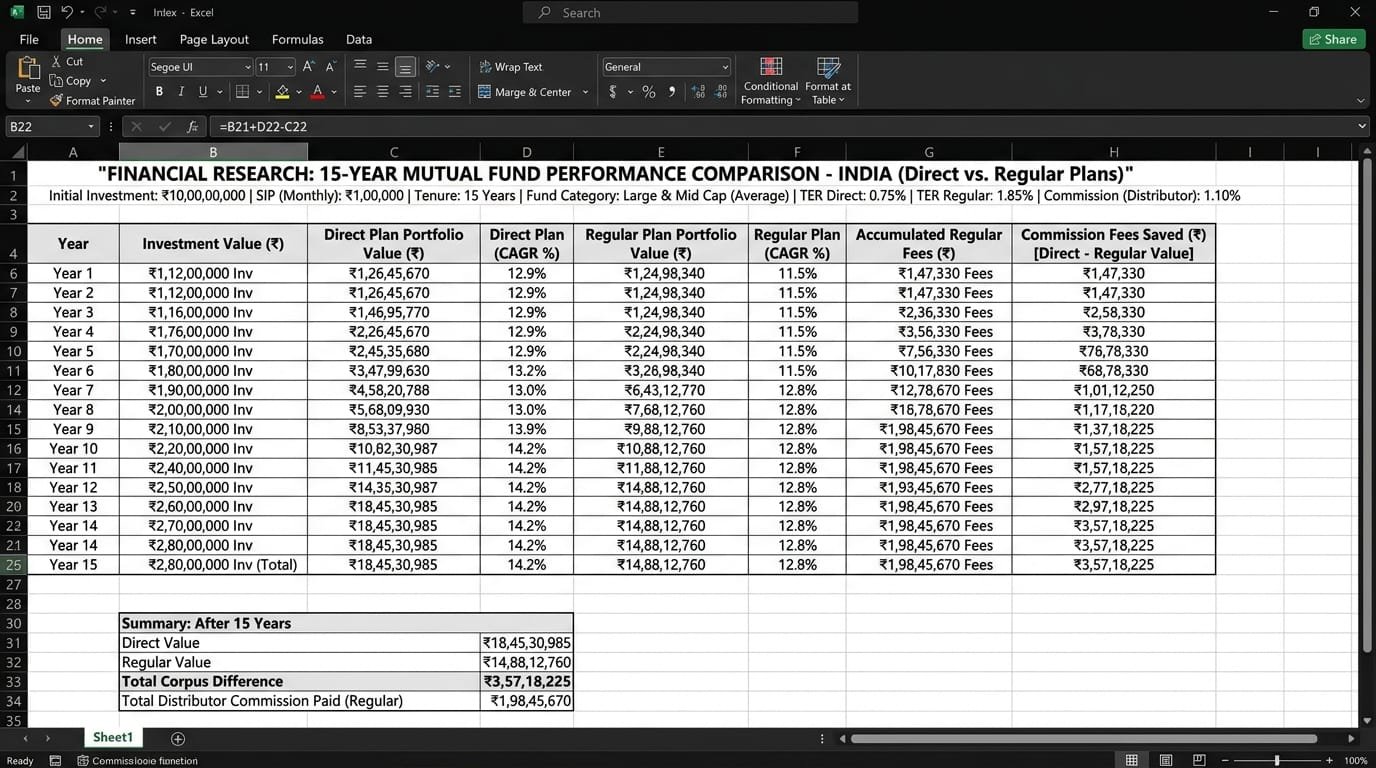
Direct Plan vs. Regular Plan: Why Students Must Never Choose Regular Plans
Every single mutual fund in India is offered in two distinct formats: Direct Plan and Regular Plan. Understanding this distinction is crucial for protecting your wealth:
- Regular Plans: Sold by traditional bank relationship managers, local agents, and commission brokers. The mutual fund company secretly deducts 1% to 1.5% from your portfolio every year to pay ongoing commissions to the broker.
- Direct Plans: You invest directly through SEBI-registered discount platforms like Zerodha Coin or Groww. Zero middleman commission is deducted, meaning 100% of your earnings stay in your account.
The Real Impact: On a 15-year SIP of ₹1,000 per month, that small 1.5% commission difference cuts your final wealth by over ₹2,40,000 in lost returns. Always make sure the word "Direct" is explicitly written in the fund title before confirming your purchase.
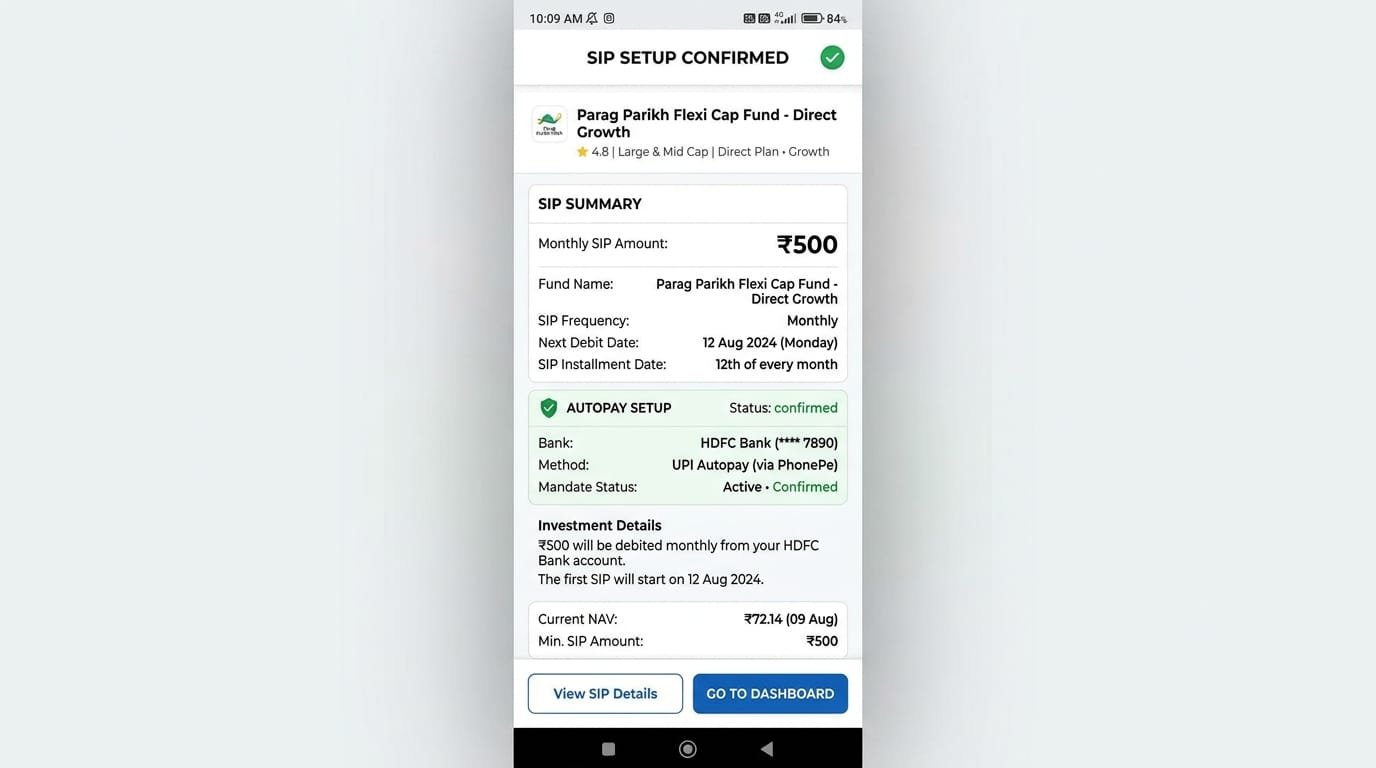
How to Set Up Your Monthly SIP on Groww, Zerodha Coin, and Angel One
Automating your monthly SIP takes under three minutes on your smartphone. Here is how the top three platforms compare for college students:
| Platform | Plans Available | Minimum SIP | Key Advantage for Students |
|---|---|---|---|
| Groww | 100% Direct Plans | ₹100 | Cleanest interface for beginners, 1-click UPI Autopay setup |
| Zerodha Coin | 100% Direct Plans | ₹100 | Zero distributor fees, Demat holding, and Step-Up SIP option |
| Angel One | 100% Direct Plans | ₹100 | Advanced research tools, smart advisory, easy e-mandate |
1. Setting Up SIP on Groww (Step-by-Step)
- Download Groww & Complete DigiLocker Verification: Log in with your mobile number, verify Aadhaar OTP via DigiLocker, and enter your PAN details.
- Search for Your Fund: Type the scheme name in the search bar (for example: Nippon India Small Cap Fund Direct Growth). Always verify that it says Direct Plan.
- Tap "Start SIP": Select the Start SIP button at the bottom of the screen.
- Enter Amount and Pick Date: Enter your monthly budget (₹100 or ₹500). Pick a date 2-3 days after your pocket money or allowance usually arrives.
- Authorize UPI Autopay: Select Google Pay, PhonePe, or Paytm. Enter your UPI PIN to approve the recurring mandate. Your automated monthly SIP is now live!
2. Setting Up SIP on Zerodha Coin (Step-by-Step)
- Log into Coin: Open the Coin app or visit coin.zerodha.com using your Zerodha user ID.
- Search for Direct Scheme: Search for your fund (such as HDFC Index S&P BSE Sensex Fund Direct Growth). Coin exclusively lists 100% Direct Plans with zero commission.
- Click "SIP" & Choose Frequency: Tap SIP and set the frequency to Monthly. You can also turn on the Step-Up SIP feature to raise your monthly investment by 10% each year as your internship stipend grows.
- Authorize Mandate: Link your student savings bank account using Net Banking or Debit Card to approve the recurring auto-debit.
3. Setting Up SIP on Angel One (Step-by-Step)
- Go to Mutual Funds: Open the Angel One mobile app and tap on the Mutual Funds tab from the home dashboard.
- Discover Scheme: Search for Parag Parikh Flexi Cap Direct Plan and check the NAV performance chart.
- Confirm SIP: Tap Start SIP, choose your monthly date, enter your amount, and approve the auto-debit via UPI or Net Banking.
Mutual Fund Tax Rules for College Students (2026 Simplified)
Students often worry that investing in mutual funds will lead to tax notices. Here is how Indian taxation legally applies to college students:
- Zero Tax for Non-Earning Students: Under Indian tax laws, if your total annual income (including pocket money stipends and mutual fund profits) is below the basic tax exemption limit (₹3,00,000 per year under the New Tax Regime), you pay zero tax.
- Long-Term Capital Gains (LTCG): For equity mutual funds held for more than 12 months, profits up to ₹1.25 Lakh every financial year are completely tax-exempt.
- Short-Term Gains (STCG): If you redeem equity funds within 12 months, gains are taxed at 20%, but basic exemption thresholds continue to protect college students who do not have other taxable salaries.
How to Allocate Your Student Pocket Money for Monthly SIPs
To invest consistently without running out of money before the end of the month, follow the 50/30/20 Student Budgeting Framework:
- 50% for Essentials: Semester books, bus/metro transit, mobile recharges, hostel canteen meals.
- 30% for Fun & Social Life: Outings with friends, movies, weekend snacks.
- 20% for Automated SIP: Transfer ₹100, ₹500, or ₹1,000 directly into your mutual fund SIP on the day your allowance arrives before you have a chance to spend it.
Regulatory & Editorial Standards (AMFI & SEBI Disclosure):
paisakmao.de is an independent financial education initiative founded by Asif Khan. We are not SEBI-registered investment advisers (RIA) or portfolio managers. Mutual fund investments are subject to market risks; please read all scheme-related documents (SID / KIM) carefully on official AMC portals before investing. Past performance figures reflect historical data up to 2026 and do not guarantee future returns.
Frequently Asked Questions (FAQs)
Can a college student invest in mutual funds without a job or income proof?
Yes, absolutely. SEBI and AMFI guidelines do not require salary slips or income tax returns (ITR) to invest in mutual funds. As long as you are 18+ years old with a valid PAN card, Aadhaar card, and a student bank account, you can complete paperless Video-KYC in under 5 minutes on apps like Groww or Zerodha Coin.
What is the minimum monthly SIP amount a student can start with?
You can start with as little as ₹100 per month. Popular student-friendly funds like Nippon India Small Cap Fund, HDFC Index S&P BSE Sensex Fund, and ICICI Prudential Bluechip Fund all allow ₹100 micro-SIPs, making investing accessible on any college budget.
What happens if I don't have enough pocket money in my bank on SIP date?
The mutual fund company simply skips the installment for that month with zero penalties. To avoid bank auto-debit bounce fees, you can easily tap "Pause SIP" on your app 2-3 days before the scheduled date for 1 to 3 months without any charge.
Is a Fixed Deposit (FD) better or a Mutual Fund SIP for students?
Bank FDs offer guaranteed 6.5% to 7% returns, which barely beats inflation. Equity mutual funds have historically delivered 14% to 18%+ CAGR over 5-7 year horizons. If you need money within a year for semester fees, use a Bank FD; for long-term wealth creation, a Mutual Fund SIP is far superior.
Which is the best and safest app for college students to invest in mutual funds?
Groww and Zerodha Coin are the top two choices. Both are SEBI-regulated, offer paperless DigiLocker KYC, charge zero account opening fees, and strictly sell Direct Plans with zero middleman commissions.
- Best 5 Mutual Funds for College Students in India (2026)
- Best 5 Lifetime Free Credit Cards for College Students in India (No Income Proof) in 2026
- Emergency Fund vs Savings Account: Where to Keep Your Backup Cash in 2026?
- How to Organize Multiple Savings Goals Before 2027: A Simple Money Plan
- Cash Stuffing Method for Beginners: A Simple Step-by-Step Guide