
In today’s fast-paced life, having a steady monthly income is crucial. Investing in the right schemes can help you earn ₹5,000, ₹10,000, or more every month while keeping your money safe. These monthly income schemes provide fixed and reliable returns, helping you manage expenses and secure your financial future. Here are the top 7schemes to start earning consistent monthly income.
How to Save Money as a Student: Beginner Guide in 2025
- 1. Senior Citizen Savings Scheme (SCSS)
- #2Post Office Monthly Income Account (POMIA)
- #3Corporate Fixed Deposits (Company FD / Corporate Deposits)
- 2Income Alone
- 3 Monthly Payout Option
- 4 Higher Returns
- #4 Corporate Fixed Deposits
- #5Debt Mutual
- Pradhan Mantri Vaya Vandana Yojana (PMVVY)
- Your Attractive Heading
- 7How a Systematic Withdrawal Plan (SWP) Works
1. Senior Citizen Savings Scheme (SCSS)
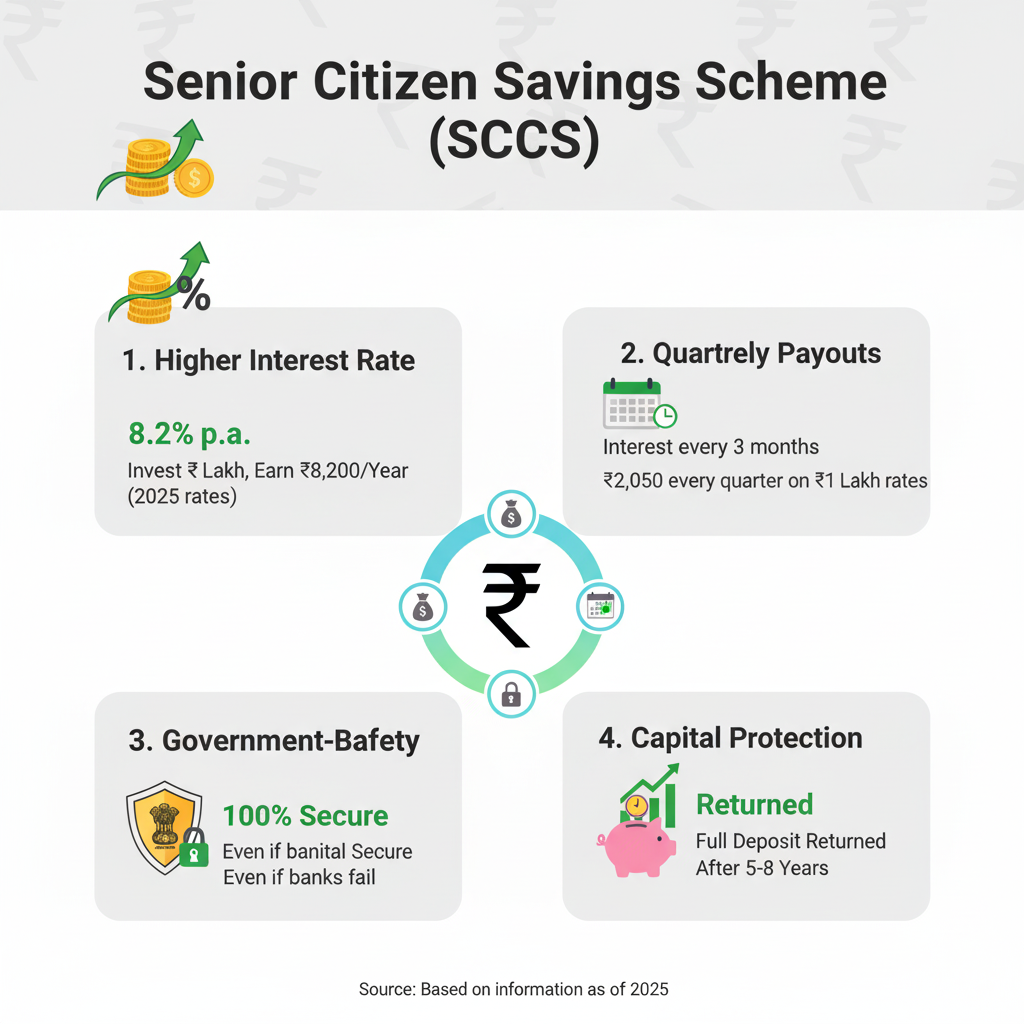
- Higher Interest Rate
SCSS generally offers around 8.2% p.a. (2025 rate approx). For example, if you invest ₹1,00,000, you can earn about ₹8,200 per year as interest. Bigger deposits like ₹10 Lakh can generate ₹82,000 yearly.
#2Quarterly Payouts
The interest is credited every 3 months. So, on an investment of ₹1,00,000, you get around ₹2,050 every quarter. This acts like a steady pension for senior citizens.
3. Government-Backed Safety
Since SCSS is a government scheme, your capital is 100% safe. Even if banks or private firms fail, your ₹1 Lakh or more investment remains fully secure.
4. Capital Protection
At the end of the maturity period (5 years, extendable to 8 years), your full deposit (say ₹1,00,000) is returned along with all the interest you earned during the years.
#2Post Office Monthly Income Account (POMIA)
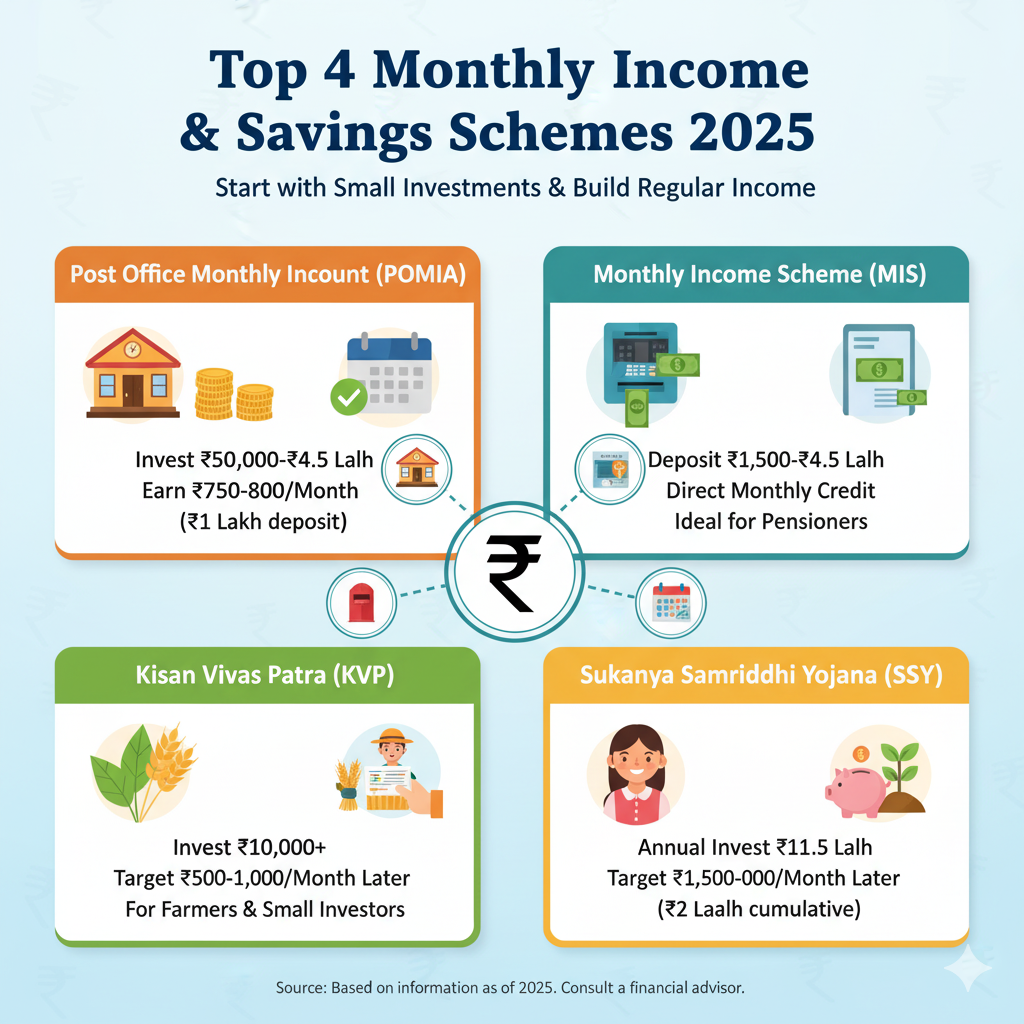
By depositing ₹50,000 to ₹4,50,000, you can earn a fixed monthly interest. For example, a deposit of ₹1,00,000 could give you approximately ₹750–₹800 per month. Your principal is safe, and you enjoy a regular income without any hassle.
2. Monthly Income Scheme (MIS)
The Monthly Income Scheme allows you to deposit ₹1,500 to ₹4,50,000 and get monthly income directly into your account. For example, a ₹2,00,000 deposit can provide around ₹1,000 per month, making it ideal for pensioners or small investors.
3. Kisan Vikas Patra (KVP)
Invest ₹10,000 or more in KVP and watch it grow over the fixed tenure. While the maturity amount comes after a few years, it can be used to generate regular monthly income, roughly ₹500–₹1,000 per month, depending on your planning. This is great for farmers or small investors seeking safe returns.
4. Sukanya Samriddhi Yojana (SSY
Invest ₹1,000 to ₹1,50,000 annually in SSY for your daughter’s future. The scheme accrues interest and can be planned to provide monthly financial support later. For example, a cumulative investment of ₹2,00,000 can give a monthly benefit of ₹1,500–₹2,000, securing both savings and regular income.
#3Corporate Fixed Deposits (Company FD / Corporate Deposits)
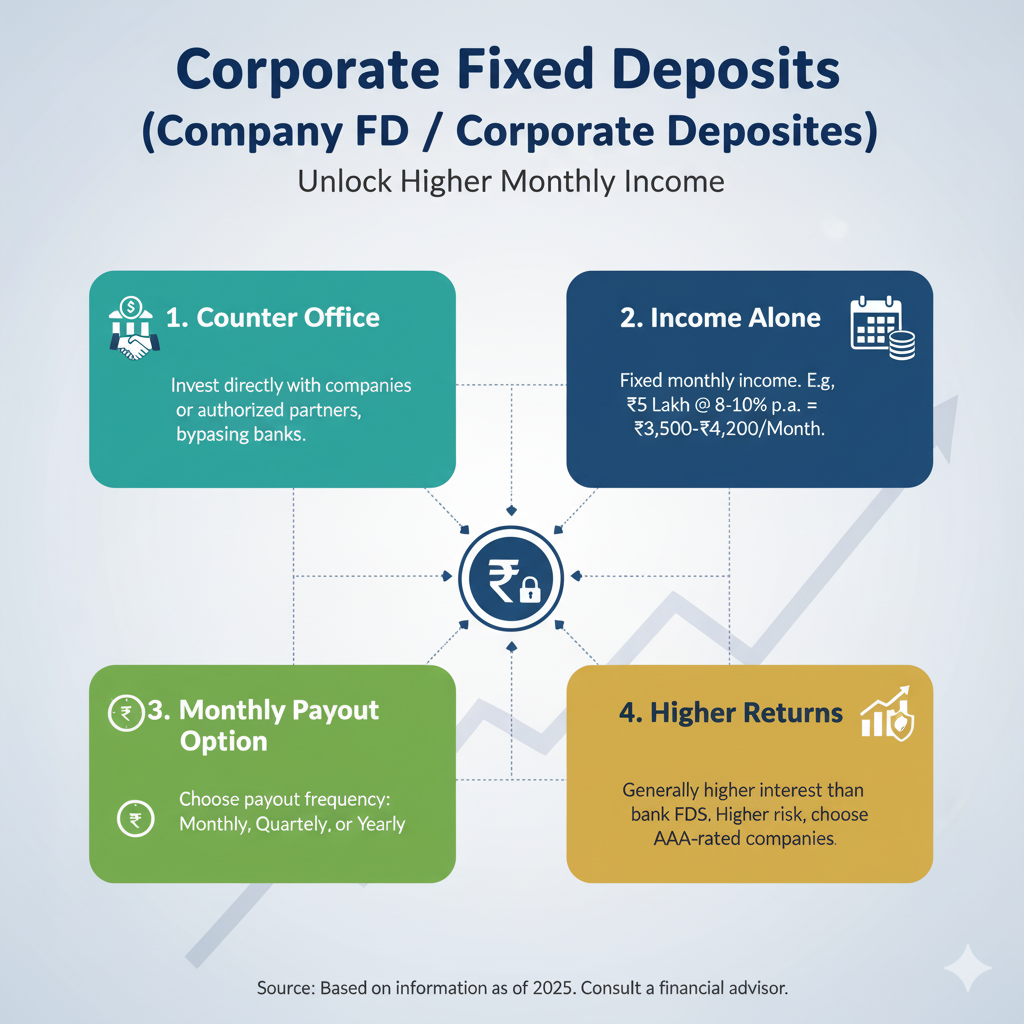
1. Counter Office
Corporate FDs are issued directly by companies instead of banks. You have to invest through the company’s office or authorized partners, which often helps you get higher interest rates compared to bank deposits.
2Income Alone
This scheme is designed to provide a steady monthly income. For example, if you invest ₹5,00,000, at an 8–10% annual interest rate, you can earn around ₹3,500–₹4,200 every month.
3 Monthly Payout Option
Corporate FDs allow you to choose payout frequency—monthly, quarterly, or yearly. If you select the monthly option, the company credits a fixed amount to your account every month, ensuring regular income.
4 Higher Returns
Compared to bank FDs, corporate FDs generally offer higher returns. However, they carry slightly more risk since repayment depends on the company’s financial health. Always choose AAA or high-rated companies for safer investments.How to Save Money as a Student: Beginner Guide in 2025
#4 Corporate Fixed Deposits

Corporate Fixed Deposits (FDs) are investment instruments issued by companies that can offer higher returns than bank FDs. Here is the information presented professionally with numbered points and financial figures:
1Higher Returns: Corporate FDs
offer a 1% to 3% higher return compared to bank FDs. For example, a bank FD might offer a 6.5% return, while a corporate FD could yield 8.5%.fds
Monthly Income Option: Many corporate
FDs provide a monthly payout option. If you invest ₹5,00,000 at an annual return of 8.5%, you could receive a fixed mounthly income of approximately ₹3,542
3Investment & Risk:
: It is essential to check a company’s credit rating before investing. Companies with high ratings like AAA or AA+ are considered the safest. However, they always carry slightly more risk than bank .fds.
Investment Amount & Term:
start investing in corporate FDs with amounts as low as ₹5,000 and can choose a term from 1 to 5 years as per your convenience.
Conclusion:
Corporate FDs are a good option for investors who seek returns higher than bank FDs and are willing to take on a moderate level of risk.easy money for busy students
#5Debt Mutual
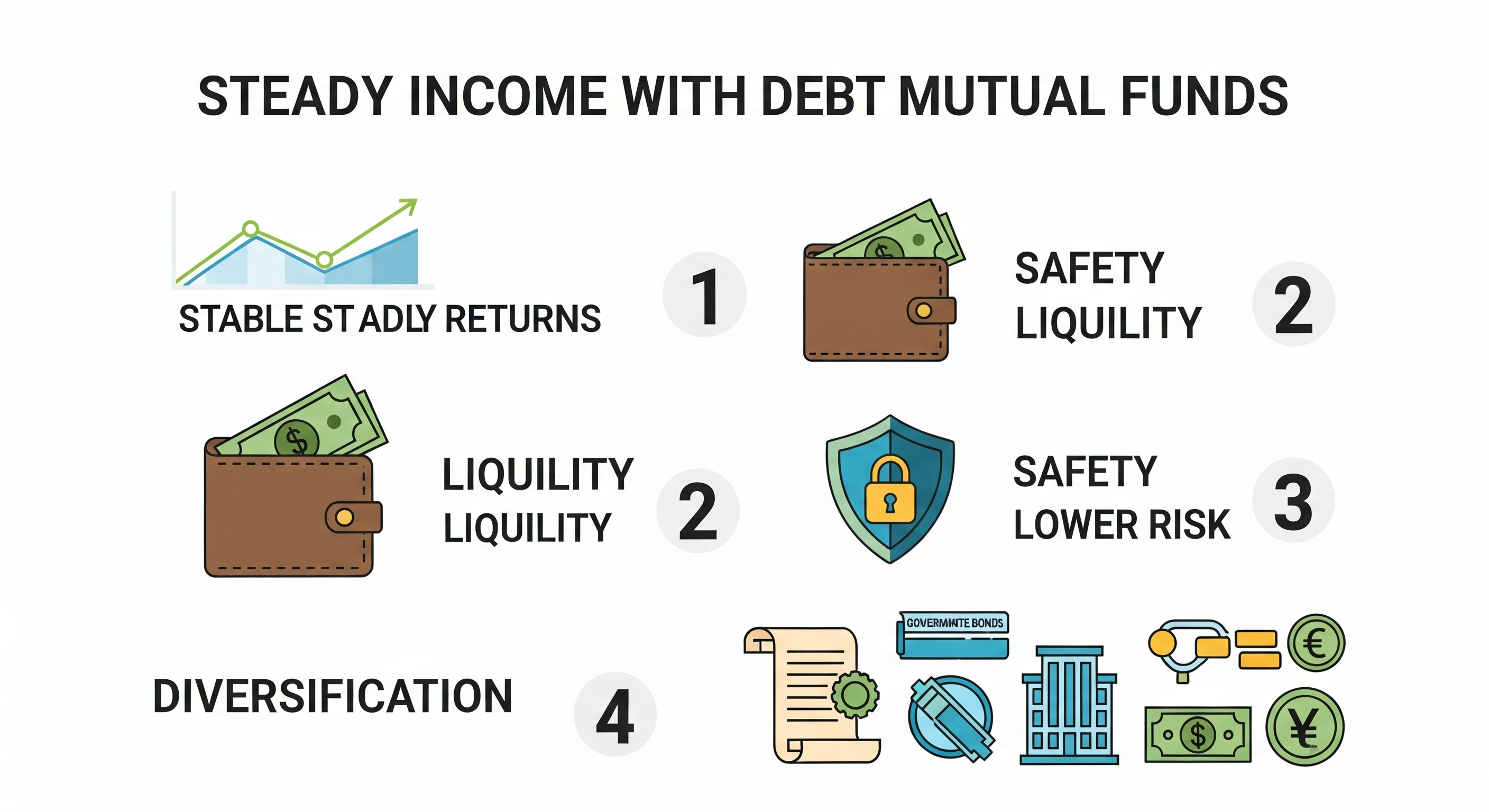
Mutual Funds:Steady Income: Debt Mutual Funds aim to provide a steady income stream by investing in fixed-income securities like bonds. This makes them a great option for investors who are looking 1for a regular return without the volatility of the stock market.
2 Safety AND Risk
Safety and Risk: They are generally considered safer and less risky than equity (stock) funds. While they are not risk-free, they offer a good balance between safety and returns, making them a suitable choice for conservative investors.
3High Liquidity
Unlike fixed deposits that have a lock-in period, most Debt Mutual Funds offer high liquidity. This means you can easily withdraw your money at any time, often within 1-3 working days, without any penalty.Best Investment Options for Beginners in India (2025 Guide)
Pradhan Mantri Vaya Vandana Yojana (PMVVY)

The Pradhan Mantri Vaya Vandana Yojana (PMVVY) is a government-backed pension scheme specifically designed for senior citizens. It offers a guaranteed return and a steady stream of income to provide finence Security in their later years.
1Guaranteed Pension:
The scheme provides a guaranteed pension for 10 years. The interest rate is fixed at the time of investment, which ensures your income is not affected by market fluctuations. For instance, the current interest rate is approximately 7.4% p.a. (as of 2025).
Your Attractive Heading
2Investment Limits:
An individual can invest a maximum amount of ₹15 Lakh in this scheme. This can be investment made in a single lump sum or in multiple installments. The minimum investment amount required to get a pension of ₹1,000 per month is ₹1,56,658.
3 Flexible Pension Payouts:
You can choose to receive your pension monthly, quarterly, half-yearly, or yearly, depending on your needs. For example, if you invest ₹15 Lakh, you can receive a pension of approximately ₹9,250 every month for the entire 10-year period.
4Early Exit and Loan Facility:
The scheme also includes provisions for premature exit in special circumstances, like a critical illness. Additionally, you can avail of a loan against the policy after 3 years of investment. The maximum loan amount is 75% of the purchase price.
5 Return of Purchase Price:
At the end of the 10-year policy term, the original investment amount (purchase price) is returned to the investor. If the policyholder passes away during the term, the purchase price is paid to the nominee.
7How a Systematic Withdrawal Plan (SWP) Works
1. Creating a Regular Income
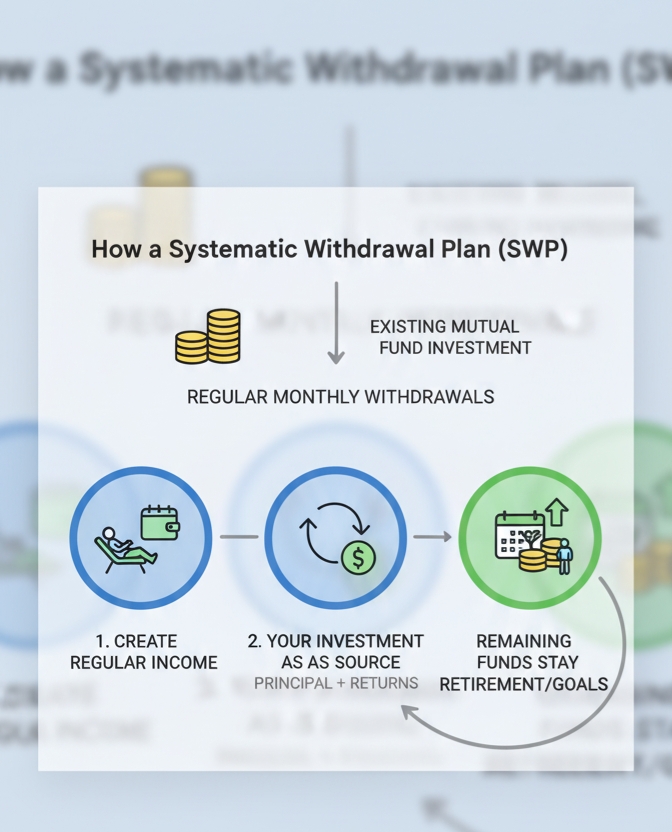
An SWP allows you to create a regular, fixed income from your existing mutual fund investment. This is often used by retirees or individuals who have a lump sum of money and need a steady cash flow.
2. Your Investment as the Source
The money you receive each month isn’t just interest. It is a combination of your initial investment and the returns it has generated. Essentially, you’re withdrawing a part of your own capital over a period of time.3. Potential for Continued Growth
3. Potential for Continued Growth
Even as you withdraw money, the remaining amount in the mutual fund stays invested. This means it continues to have the potential to grow, which can help your investment last longer and potentially even increase in value over time.
4. An Example with Numbers
For instance, if you have a ₹10 Lakh investment, you could set up an SWP to withdraw ₹5,000 per month. Over the course of a year, you would receive ₹60,000 in income while the remaining ₹9,40,000 continues to grow in the fund.
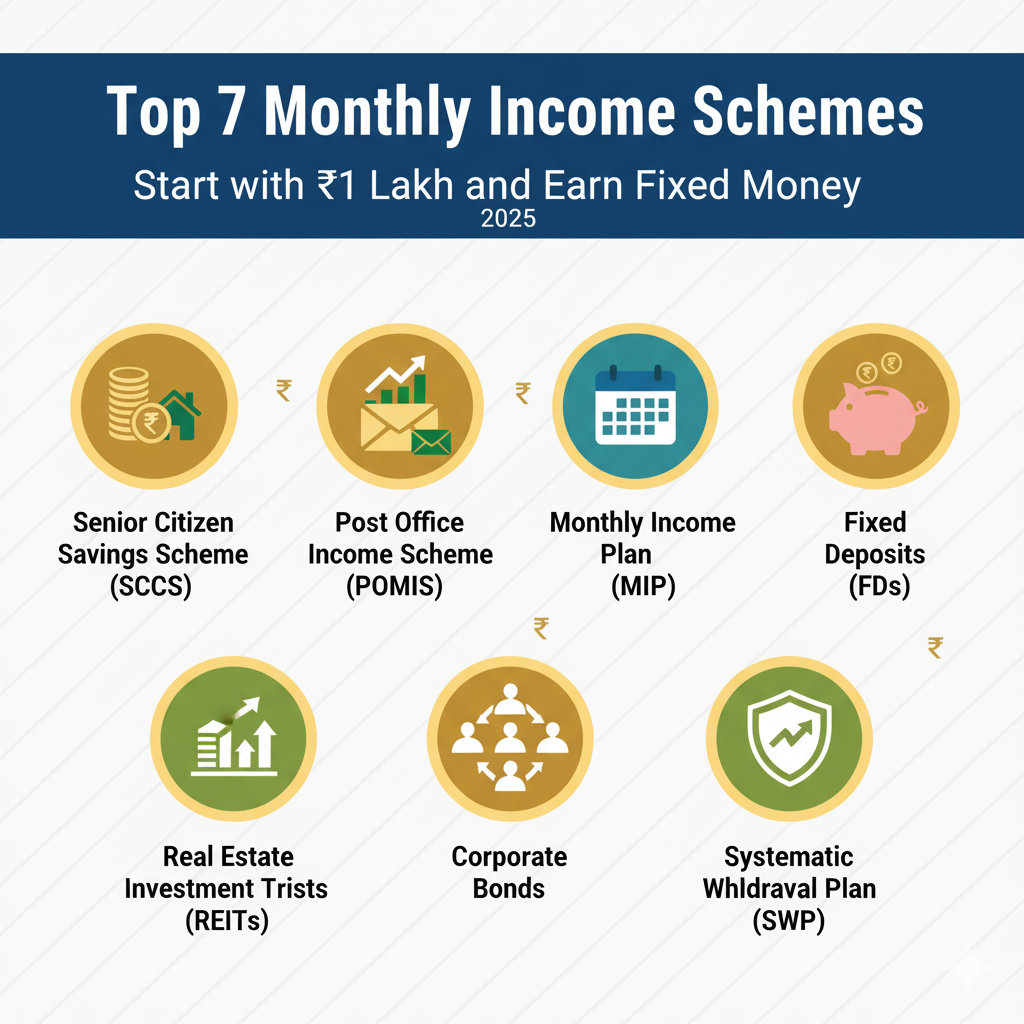
Senior Citizen Savings Scheme (SCSS)
A government-backed, secure plan for senior citizens that provides a fixed, regular income.
Post Office Monthly Income Scheme (POMIS)
A low-risk option from the Post Office that offers a steady monthly income.
Monthly Income Plan (MIP)
A type of mutual fund that balances debt and equity investments to provide a regular income with some potential for growth.
Fixed Deposits (FDs)
A traditional and secure investment where you can choose to receive your interest earnings on a monthly basis.
Corporate Bonds
You receive regular interest payments by lending money to a corporation through these bonds.
Systematic Withdrawal Plan (SWP)
Not a scheme, but a way to get a fixed cash flow by setting up regular withdrawals from your existing mutual fund investment.
- Why Gold Prices Are Rising in 2026 Fully Explained for Investors
- Top 10 Finance Skills That Can Help Students Earn Money in Real Life
- Top Mutual Funds With 35%+ One-Year Returns — Deep Dive Analysis & Guide (2026 Data)
- How to Save Money When Income Is Low (Practical Guide for Beginners)
- 7 Legal Online Income Ideas for Students in 2026 (Without Investment)