
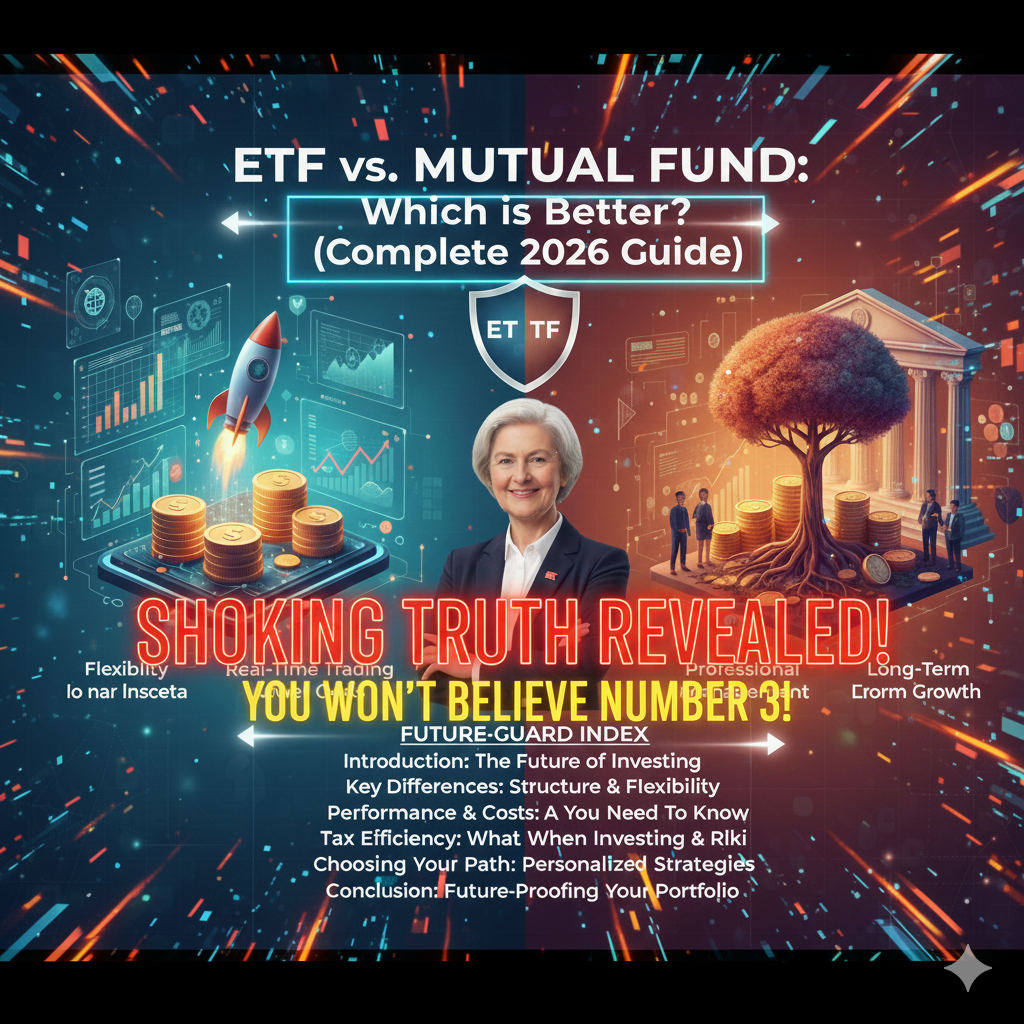

1. Introduction: What Are ETFs & Mutual Funds?
Investing doesn’t have to be complicated — two of the most common ways to invest are ETFs (Exchange-Traded Funds) and Mutual Funds. Both pool money from many investors to buy a basket of securities like stocks or bonds, but how you buy them, cost, taxation, and flexibility vary significantly.https://www.britannica.com/money/etfs-vs-mutual-funds?utm_source=chatgpt.com technology thematic fund india best technology mutual fund top technology thematic fund
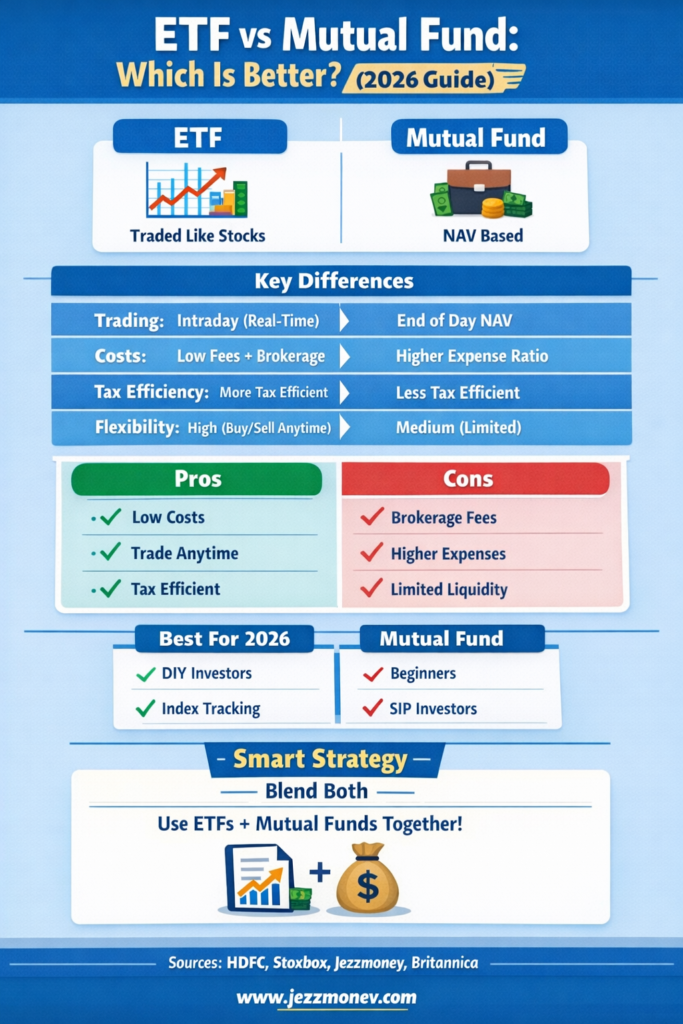
table picture 🖼️👇
2. What Is an ETF? (Explained)
🔹 ETF stands for Exchange-Traded Fund.🔹 It’s like a stock that represents a basket of assets (index, stocks, bonds, commodity, etc.).
🔹 Traded on stock exchanges throughout the day — price keeps changing.🔹 Most ETFs track indices (e.g., Nifty 50, S&P 500). https://www.britannica.com/money/etfs-vs-mutual-funds?utm_source=chatgpt.com
Why ETFs exist:
Provide diversified investing without picking individual stocks.Combine features of stocks and mutual funds.https://cleartax.in/s/etfs-vs-mutual-funds?utm_source=chatgpt.comBest Saving Schemes for Middle Class Family (India)
3. What Is a Mutual Fund? (Explained)
AMutual Fund pools money from many people.🔹 A fund manager buys and sells assets based on a strategy.🔹 You buy/sell at NAV (Net Asset Value) — calculated once daily.https://www.hdfc.bank.in/blogs/mutual-funds Highest mutual fund returns 2025 Diwali
Types of Mutual Funds:
equity fund
debt fund
hybrit fund
Index Funds (passive like ETFs but not exchange-traded)https://www.axis.bank.in/blogs/mutual-funds/differences-between-etf-funds-vs-mutual-funds?utm_source=chatgpt.com
How They Work (Step-by-Step)
ETF (Example)
You place a buy order via broker/demat.It’s executed in real-time during market hours.Price moves with supply & demand.✔️ Like buying stocks.https://www.jezzmoney.com/blog/difference-between-etf-and-mutual-fund?utm_source=chatgpt.com
Mutual Fund (Example)
Place order anytime before market close.Purchase value calculated at end-of-day NAV.You get units per NAV price.✔️ More passive & systematic
5. Key Differences (Comparison Table)
Feature. ETF mutul fund 💹
Trading. Traded l. ike stocks (intraday)Only at NAV (end of day)
PriceMarket price = dynamic
CostsLower expense ratio, brokerage appliesHigher expense ratios
Minimum InvestmentPrice of 1 unitTypically higher (some Rs500+)
SIPNot in all brokersYes (popular)Tax Efficiency Generally more tax-efficientCapital gains distributed
ManagementMostly passiveActive or passiveFlexibilityHighMedium
6. Advantages — ETF vs Mutual Fund
ETFs
Low expense ratios → cost efficient 🔽https://www.hdfc.bank.in/blogs/mutual-funds
Trade anytime (intraday flexibility) ✔️https://www.britannica.com/money/etfs-vs-mutual-funds?utm_source=chatgpt.com
Tax efficiency — lower capital gains hithttps://www.britannica.com/money/etfs-vs-mutual-funds?utm_source=chatgpt.com
🔹 Mutual Funds
Professional active management (can sometimes beat market)https://www.axis.bank.in/blogs/mutual-funds/differences-between-etf-funds-vs-mutual-funds?utm_source=chatgpt.com
SIPs make disciplined investing easy ✔️https://stoxbox.in/financial-news-hotbox/etf/etf-vs-mutual-funds?utm_source=chatgpt.com
Fractional unit investing (makes small investments easierhttp://Fractional unit investing (makes small investments easierhttp://EARN MONEY AS A STUDENT JUST A PHONE, NO INVESTMENT
7. Disadvantages — ETF vs Mutual Fund
ETFS👇
Brokerage charges apply (buy/sell) 🧾https://stoxbox.in/financial-news-hotbox/etf/etf-vs-mutual-funds?utm_source=chatgpt.com
Bid-ask spread can reduce gains for low-liquidity ETFs 🧮https://stoxbox.in/financial-news-hotbox/etf/etf-vs-mutual-funds?utm_source=chatgpt.com
Requires demat + trading account 📈http://Requires demat + trading account 📈
⚠️ Mutual Funds
Higher expense ratios can eat returns 📉 �HDFC BankOnly once-a-day trading at NAV 🔄 �Encyclopedia BritannicaTax inefficiencies from internal security sales 🧾 �https://cleartax.in/s/etfs-vs-mutual-funds?utm_source=chatgpt.com.Best performing investment sector 2026
8. Which One Is Better for You in 2026?
🎯 Choose ETF if:
✅ You want lower cost & more control over timing. 🔍
✅ You’re okay with a demat + trading account.
✅ You prefer index-based investing (Nifty/S&P).
🎯 Choose Mutual Fund if:
✅ You’re a beginner & want automatic investing (SIP).✅ You trust active management to outperform.✅ You prefer simplicity over intraday decisions.
👉 Many smart investors use a blend:
ETFs for core low-cost holdingsMutual funds for systematic SIP & active diversification
Hidden Points Investors Often Miss
✅ Not all ETFs are low risk — some are leveraged/sector-specific. �✅ ETFs can trade at a premium/discount to NAV — impacting returns if volume is low. �https://www.reddit.com/r/StartInvestIN/comments/1ii0ted/these_etfs_are_costing_you_a_bomb_heres_why/?utm_source=chatgpt.com
✅ SIP with ETFs is possible via some brokers now 🚀 �✅ Mutual funds can outperform only if the manager consistently beats the market. (rare statistically) �https://www.finideas.com/etfs-vs-mutual-funds-which-is-right-for-your-financial-goals/?utm_source=chatgpt.comHigh-Growth Industries Every Investor Must Watch in 2025
Conclusion + Action Steps
📌 Summary:ETFs = cheaper, tradable, tax-efficientMutual Funds = easy, professional, SIP-friendly💡 2026 Choice Tip:For most investors — index ETF + diversified mutual funds works best. Blend passive low cost with systematic planning.
- Why Gold Prices Are Rising in 2026 Fully Explained for Investors
- Top 10 Finance Skills That Can Help Students Earn Money in Real Life
- Top Mutual Funds With 35%+ One-Year Returns — Deep Dive Analysis & Guide (2026 Data)
- How to Save Money When Income Is Low (Practical Guide for Beginners)
- 7 Legal Online Income Ideas for Students in 2026 (Without Investment)